
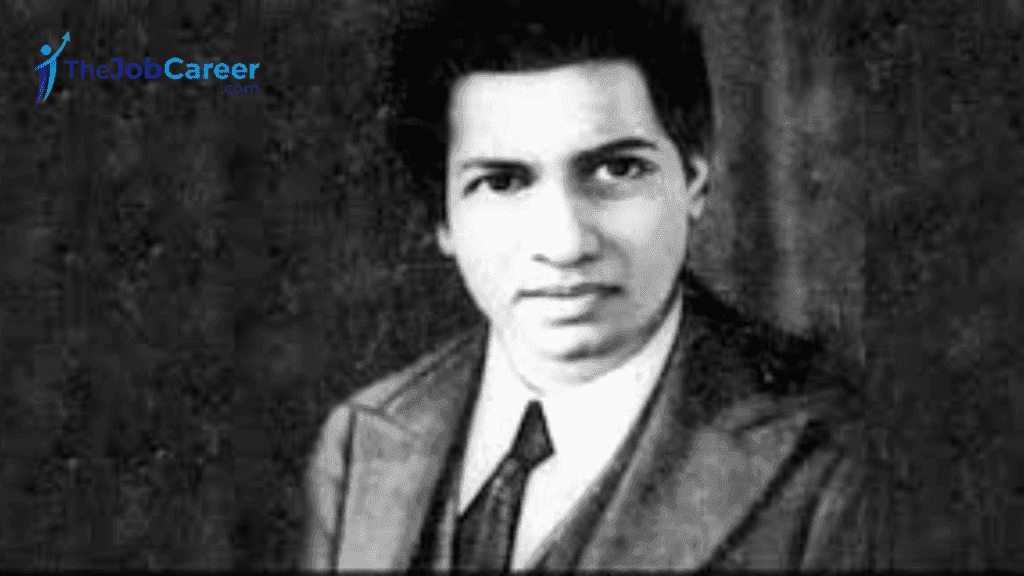

Every year on 22 December, India celebrates National Mathematics Day to honor the birth anniversary of one of the greatest mathematical geniuses the world has ever known—Srinivasa Ramanujan. This day is not just about remembering a legendary mathematician; it is about recognizing the power of mathematics in shaping our daily lives, technology, economy, and future.
Mathematics is often misunderstood as a subject limited to classrooms, exams, and textbooks. In reality, it forms the invisible foundation of modern civilization. From mobile phones and digital payments to medical research and space exploration, mathematics quietly drives progress. National Mathematics Day encourages us to look beyond formulas and marks and understand how deeply numbers influence the world around us.
Why National Mathematics Day Matters
National Mathematics Day was officially declared by the Government of India in 2012, marking the 125th birth anniversary of Srinivasa Ramanujan. The purpose behind this initiative was clear—to promote awareness about the importance of mathematics and inspire students to approach the subject with curiosity rather than fear.
In India, mathematics has traditionally been viewed as a difficult or elite subject. Many students associate it with pressure, stress, and competition. National Mathematics Day challenges this mindset by showing that mathematics is not just about solving equations—it is about solving real-world problems and developing logical thinking.
This day also highlights the role of mathematics in national development, innovation, and global competitiveness. It reminds society that nurturing mathematical thinking is essential for building a strong and sustainable future.
Srinivasa Ramanujan: A Genius Beyond Boundaries
Srinivasa Ramanujan was born on 22 December 1887 in Erode, Tamil Nadu, and grew up in Kumbakonam. Coming from a modest background, he had limited access to formal education and resources. Despite these challenges, his extraordinary talent allowed him to independently discover mathematical results that stunned scholars worldwide.
Without formal training, Ramanujan developed groundbreaking work in:
- Number theory
- Infinite series
- Continued fractions
- Mathematical analysis
He filled notebooks with thousands of original formulas—many of which were far ahead of their time and continue to influence modern research.
Ramanujan’s life took a historic turn when British mathematician G. H. Hardy recognized his genius and invited him to Cambridge University. Hardy later described Ramanujan as a mathematician comparable to legends like Euler and Gauss.
The Human Side of a Mathematical Legend
What makes Srinivasa Ramanujan truly inspiring is not just his intellect, but his humility and spirituality. He believed mathematics was a divine language and often said that equations had no meaning unless they expressed a deeper truth.
Despite facing health problems, cultural barriers, and financial struggles, Ramanujan remained dedicated to his work. His journey proves that passion, curiosity, and perseverance can overcome even the toughest limitations.
For students today, especially those from underprivileged backgrounds, Ramanujan’s story serves as a powerful reminder that talent can emerge from anywhere.

Mathematics Beyond the Classroom
One of the most important messages of National Mathematics Day is that mathematics does not end at school—it begins there.
Mathematics in Daily Life
We use mathematics every day, often without realizing it:
- Managing household budgets
- Calculating discounts while shopping
- Estimating travel time and fuel costs
- Understanding interest rates and loans
From digital payments to mobile recharge plans, mathematics ensures accuracy and fairness in everyday transactions.
Mathematics and Technology
Modern technology stands firmly on mathematical foundations. Almost every digital innovation relies on mathematical models and algorithms.
- Artificial Intelligence uses probability, statistics, and linear algebra
- Cryptography depends on number theory and prime numbers
- Internet networks rely on mathematical optimization
- Data science transforms data into insights using statistics
Without mathematics, the digital world would simply not exist.
Mathematics in Business and Economics
Mathematics plays a crucial role in business decision-making. Companies rely on mathematical models for:
- Pricing strategies
- Profit and loss analysis
- Risk management
- Market forecasting
Stock markets, banking systems, insurance policies, and taxation structures all function smoothly because of mathematical accuracy.
Mathematics in Science and Medicine
Scientific discovery is impossible without mathematics. It helps scientists describe natural phenomena, test hypotheses, and make predictions.
In healthcare, mathematics is used to:
- Analyze medical data
- Predict disease outbreaks
- Improve medical imaging
- Optimize treatment plans
During global health crises, statistical models help governments and doctors make life-saving decisions.
Mathematics in Art, Music, and Design
Mathematics is deeply connected to creativity. Geometry, symmetry, and patterns form the basis of architecture, painting, and design.
Music relies on mathematical ratios to create harmony and rhythm. Even animation, gaming, and film visual effects depend on complex mathematical calculations to create realistic experiences.
Developing Mathematical Thinking, Not Just Marks
National Mathematics Day encourages a shift from rote learning to mathematical thinking. This includes:
- Logical reasoning
- Problem-solving skills
- Analytical thinking
- Structured decision-making
These skills are valuable not only in academics but also in careers and everyday life. A mathematically trained mind is better equipped to handle uncertainty and make informed decisions.
Overcoming Math Fear: A Cultural Shift
Math anxiety is a real challenge faced by many students. It often stems from rigid teaching methods and excessive focus on marks.
To overcome this fear:
- Mathematics should be taught through real-life examples
- Mistakes should be seen as part of learning
- Technology and visual tools should be used
- Inspirational figures like Ramanujan should be highlighted
National Mathematics Day provides the perfect opportunity to promote a healthier and more engaging approach to learning mathematics.
Mathematics and National Development
For a developing country like India, mathematics is essential. Infrastructure planning, space research, defense systems, climate modeling, and digital governance all depend on strong mathematical foundations.
India’s achievements in space missions, fintech innovation, and IT services reflect the strength of its mathematically skilled workforce.
Inspiring the Next Generation
Srinivasa Ramanujan’s life sends a powerful message:
- Perfect conditions are not required for success
- Curiosity matters more than credentials
- Passion can overcome limitations
National Mathematics Day inspires students to view mathematics as a tool for exploration and creativity rather than fear.
Mathematics as a Universal Language
Mathematics transcends borders, cultures, and languages. A mathematical truth discovered in one part of the world remains true everywhere.
Ramanujan’s work, born in India and refined globally, is a perfect example of how mathematics unites humanity through shared knowledge.
Conclusion: Celebrating Numbers, Ideas, and Human Potential
National Mathematics Day is more than a symbolic celebration—it is a reminder of the profound role mathematics plays in shaping our world. By honoring Srinivasa Ramanujan, we celebrate curiosity, imagination, and human potential.
Mathematics is not confined to classrooms or examinations. It lives in technology, science, business, art, and everyday life. As we observe National Mathematics Day, let us move beyond fear and formulas and embrace mathematics as a powerful, creative, and life-enriching discipline.
By doing so, we not only honor Ramanujan’s legacy but also empower future generations to think boldly, reason clearly, and build a better world—one idea, one equation, and one inspired mind at a time.