


According to Gujarat ATS, Dr Ahmed Mohiyuddin Saiyed had been preparing a highly lethal poison named ‘Ryzin’ (Ricin) to execute a major terrorist attack
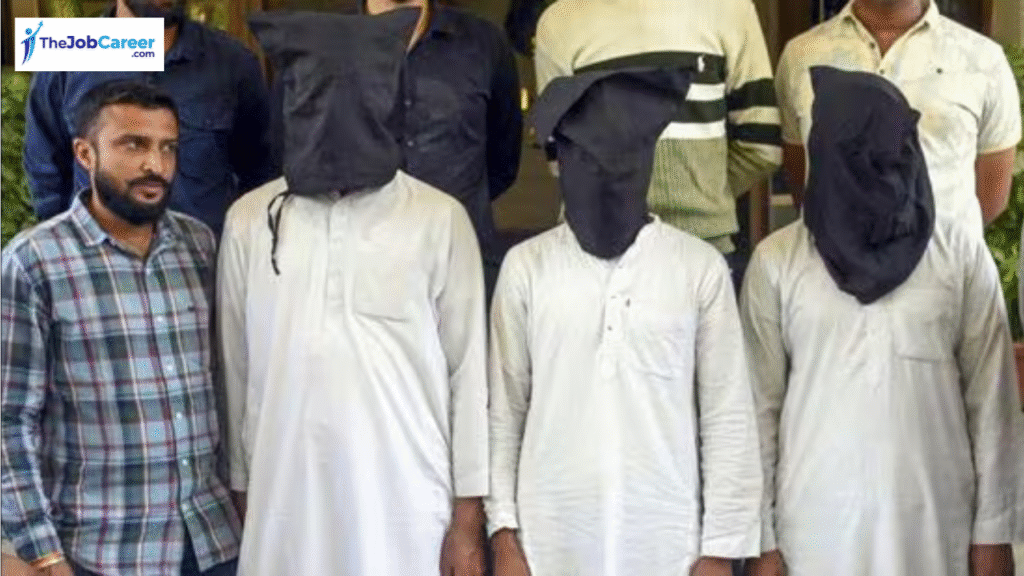
Ahmedabad: The Gujarat anti-terrorism squad (ATS) on Sunday said it has arrested three men who were preparing to carry out a terrorist attack in India.
In a significant breakthrough, the Gujarat Anti-Terrorism Squad (ATS) on Sunday announced the arrest of three individuals, including a Hyderabad-based doctor, who were allegedly preparing to execute a major terrorist attack in India. Officials said the group had procured weapons, ammunition, and toxic substances as part of their plan, which was foiled following timely intelligence and swift action by the ATS.
The Arrest Operation: Hyderabad Doctor Caught on Highway
According to a statement issued by the Gujarat ATS, the main accused, Dr. Ahmed Mohiyuddin Saiyed, aged 35, was intercepted near the Adalaj Toll Plaza on the Ahmedabad–Mehsana Highway. Acting on a specific intelligence input, officers had been tracking his movements after learning he had travelled from Hyderabad to Gujarat as part of a terror plot.
ATS teams stopped a silver Ford Figo car at the toll plaza and found Dr. Saiyed inside. A detailed search of the vehicle led to the recovery of two Glock pistols, one Beretta pistol, 30 live cartridges, and nearly four litres of castor oil, which is used in the production of Ricin, a highly toxic biological agent.
“The arrest was made following a tip-off about suspicious movements near Adalaj. The team acted promptly and recovered multiple firearms and chemical substances that could have caused mass casualties,” an ATS official said.
Following his arrest, Dr. Saiyed was taken to the ATS headquarters in Ahmedabad for intensive questioning.
A Chilling Discovery: Plot to Prepare Ricin Poison
Investigators revealed that Dr. Saiyed had been conducting chemical research to produce Ricin, a deadly toxin extracted from castor bean waste. Ricin is known to be 100 times more toxic than cyanide, and even a few milligrams can be fatal if inhaled, ingested, or injected.
“To execute a major terrorist attack, the accused was preparing a highly lethal poison named Ricin,” said a senior ATS officer. “He had procured the necessary raw materials, lab equipment, and had already begun the initial stages of chemical processing.”
Ricin currently has no known antidote, and experts warn that its use, even in small quantities, can lead to severe organ failure and death. Officials believe the accused may have planned to deploy the toxin as part of a larger terror operation in India.
Terror Links: Connection to ISKP and Pakistan
The ATS stated that initial interrogation and digital analysis suggest Dr. Saiyed maintained links with Abu Khadija, a known operative of the Islamic State Khorasan Province (ISKP) — an Afghanistan-based branch of the ISIS network.
Officials said Saiyed was in regular communication with multiple Pakistani nationals through encrypted messaging apps. Intelligence sources confirmed that his communication history included conversations about logistics, weapons procurement, and chemical materials.
“Saiyed’s network extended beyond India. He was in contact with handlers in Pakistan and was influenced by radical ideology promoted by the ISKP. His activities were part of a larger plan to destabilize peace in India,” said an official familiar with the investigation.
Dr. Saiyed, who holds an MBBS degree from a Chinese university, reportedly returned to India several years ago and had been living in Hyderabad, where he allegedly radicalized others through online forums.
Two More Arrested from Banaskantha
Analysis of the accused’s mobile phone and digital devices led the ATS to two additional suspects — 20-year-old tailor Azad Suleman Sheikh and 23-year-old student Mohammad Suhail Mohammad Saleem, both originally from Uttar Pradesh but residing in Banaskantha district, Gujarat.
The two were arrested following raids conducted late Saturday night. Investigators said Sheikh and Suhail delivered a bag containing pistols and live cartridges to Dr. Saiyed and shared his extremist ideology.
“They were part of the logistics team. Their role was to provide arms and coordinate movement between different locations,” an ATS officer said.
During questioning, the duo revealed that the firearms were sourced from Hanumangarh in Rajasthan and transported into Gujarat through covert channels. The accused also claimed that their handler used drones to smuggle weapons from across the Pakistan border, a tactic increasingly observed in recent cross-border smuggling operations.
Reconnaissance in Major Indian Cities
Investigations have revealed that the suspects conducted reconnaissance at multiple sensitive locations across India, including Lucknow, Delhi, and Ahmedabad. They are believed to have mapped out crowded public areas and government buildings, potentially as future targets.
A senior intelligence officer stated that CCTV footage, call records, and GPS data from the suspects’ phones show extensive travel patterns and coordinated movement between these cities over the past six months.
Authorities are now verifying whether the accused had any local associates or sleeper cells in these regions.
Legal Action and Custody
The Gujarat ATS has registered a case under multiple stringent laws, including the Unlawful Activities (Prevention) Act (UAPA), the Bharatiya Nyaya Sanhita, and the Arms Act.
Dr. Ahmed Mohiyuddin Saiyed was produced before a local court in Ahmedabad and remanded to ATS custody until November 17 for further interrogation. The two other accused were also taken into ATS custody for coordinated questioning.
Officials said the focus of the ongoing probe is to trace the funding network, identify foreign handlers, and determine how the weapons and chemicals were sourced and transported.
Expert Opinion: Ricin and the Emerging Biochemical Threat
Security experts have expressed concern over the recovery of castor oil and chemical apparatus from the accused’s possession, indicating a potential shift towards biochemical terrorism.
Dr. Prakash Sinha, a biochemistry expert, explained,
“Ricin is one of the deadliest toxins known. It is derived from the castor bean plant and can cause death within hours of exposure. The absence of an antidote makes it a weapon of choice for terrorist organizations looking for low-cost, high-impact attacks.”
He added that the Gujarat ATS’s timely action likely averted a catastrophic bio-terror event.
ATS Tightens Security and Expands Probe
The Gujarat ATS has increased surveillance across key installations, airports, and government buildings. Special teams are monitoring chemical supply chains, particularly in industrial and laboratory markets, to prevent the misuse of substances like castor derivatives.
“This arrest has exposed a dangerous nexus between radicalized individuals and international terror handlers. It also highlights the evolving nature of terror plots — combining chemical, cyber, and conventional methods,” said an ATS spokesperson.
Authorities are collaborating with central intelligence agencies, including the National Investigation Agency (NIA) and Research and Analysis Wing (RAW), to expand the probe. International cooperation with Interpol and foreign intelligence units is also being sought to trace communication with overseas contacts.
A Timely Foiling of a Potential Catastrophe
The arrests mark one of the most significant counter-terror breakthroughs in recent months for the Gujarat ATS. The recovery of weapons, ammunition, and toxic materials underscores the gravity of the threat.
As the investigation progresses, officials say they are focusing on unearthing the wider network behind the operation. “There are others involved — locally and internationally. We are working to identify every link before they can regroup,” said a senior ATS officer.
For now, the timely intelligence and swift response by Gujarat’s counter-terror unit have likely prevented a major terror attack that could have resulted in mass casualties.
The ATS reiterated that the operation remains ongoing, with more arrests expected in the coming days.