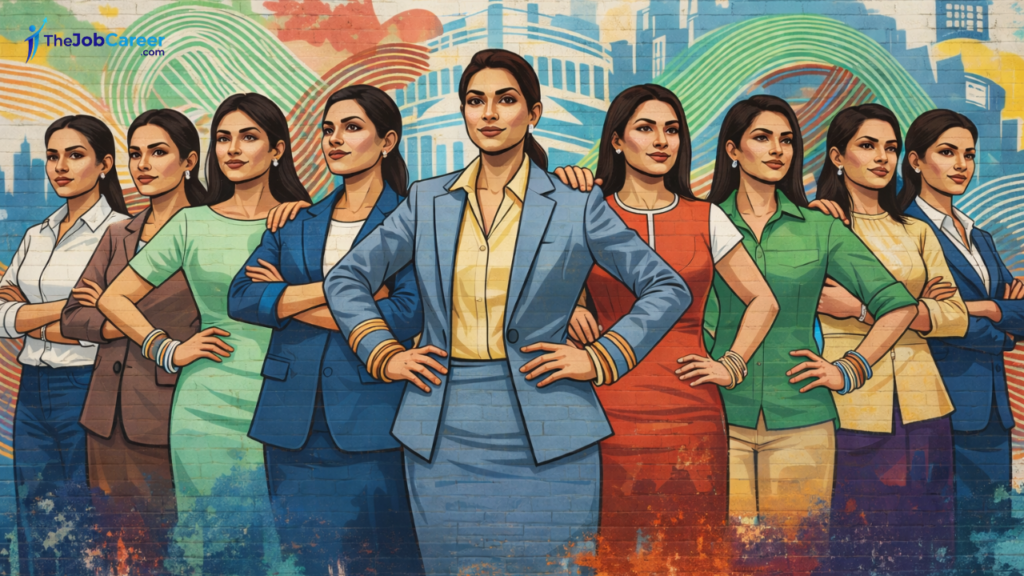

The landscape of government employment in India has undergone significant transformation over the past decade, with a marked increase in opportunities specifically designed for women. The Government of India, along with various state governments, has introduced numerous schemes, reservations, and special recruitments to encourage female participation in the public sector workforce.
Women today constitute a growing percentage of government employees across various departments, from administrative services to defense establishments. With provisions for work-life balance, comprehensive maternity benefits, safety measures, and career growth opportunities, government jobs have become increasingly attractive for women seeking stable and fulfilling careers.
This comprehensive guide explores the spectrum of government job opportunities available for women in 2026, detailing special reservations, examination patterns, application processes, and the numerous benefits that make these positions ideal for female candidates.
Understanding Reservations for Women in Government Jobs
The Indian Constitution and subsequent government policies have established various reservation mechanisms to ensure adequate representation of women in public sector employment.
Constitutional Provisions and Legal Framework
Article 15 and Article 16 of the Indian Constitution prohibit discrimination on grounds of sex and provide for special provisions for women. Building on these constitutional guarantees, the government has implemented several reservation policies.
Current Reservation Status:
Horizontal Reservation: Women enjoy 33 percent reservation in certain categories of government jobs, particularly in state government positions and specific central government departments.
Vertical Integration: In addition to category-based reservations under SC, ST, OBC, and EWS quotas, women within these categories receive additional consideration.
State-Specific Reservations: Many states have implemented higher reservation percentages for women, ranging from 33 percent to 50 percent in certain departments.
Recent Policy Developments in 2026
The year 2026 has seen progressive policy announcements aimed at increasing female participation in government services.
Several state governments have announced plans to increase women’s reservation from 33 percent to 40 percent in Group C and Group D positions. The central government is actively considering similar proposals for implementation across all ministries.
Special recruitment drives exclusively for women are being organized in departments such as education, health, social welfare, and rural development. These drives aim to fill backlog vacancies reserved for women and create additional positions.
Posts with Female-Only Reservation
Certain government positions are reserved exclusively for women due to the nature of duties, social considerations, or policy decisions aimed at empowering women.
Defense and Paramilitary Forces
Indian Coast Guard Navik (General Duty):
The Indian Coast Guard conducts special recruitments for women in the Navik category. These positions involve maritime security operations, search and rescue missions, and coastal surveillance.
Educational Qualification: 10+2 with Mathematics and Physics Age Limit: 18-22 years Physical Standards: Height 157 cm minimum Selection: Written exam, physical fitness test, medical examination Salary: Level 3, starting from Rs. 21,700 per month
Official Website: https://www.joinindiancoastguard.cdac.in
Central Reserve Police Force (CRPF) Women Constables:
CRPF regularly recruits women constables for various duties including VIP security, law and order maintenance, and counter-insurgency operations.
Educational Qualification: 10th pass Age Limit: 18-23 years Physical Standards: Height 157 cm, weight proportionate Selection: Physical efficiency test, written exam, medical test Salary: Level 3, Rs. 21,700 per month plus allowances
For latest notifications, visit: https://crpf.gov.in
Railway Protection Force (RPF) Women Constables:
RPF conducts dedicated recruitment for women constables to ensure safety and security on trains and railway premises.
Educational Qualification: 10th or 12th pass Physical Standards: Height 157 cm minimum Selection: Physical efficiency test, written exam, medical examination Facilities: Separate accommodation, women-friendly duty rosters
Check notifications at: https://www.rrbcdg.gov.in
Police and Law Enforcement
State Police Constable (Women Only):
Most state governments conduct separate recruitments for women police constables with dedicated vacancies.
States like Uttar Pradesh, Maharashtra, Tamil Nadu, and West Bengal regularly announce women-only constable recruitments with thousands of vacancies.
Educational Qualification: 10th or 12th pass depending on state Physical Standards: Height 155-160 cm depending on state Age Limit: 18-25 years with relaxations Salary: Rs. 21,000-25,000 per month (varies by state)
To check state-wise notifications, visit respective state police recruitment board websites.
Delhi Police Women Constables:
Delhi Police conducts large-scale recruitment for women constables with excellent salary packages and career growth opportunities.
Educational Qualification: 10+2 from a recognized board Physical Standards: Height 157 cm, chest 79-84 cm Selection: Physical endurance test, written exam, medical examination Facilities: Maternity leave, childcare support, flexible duty hours
Official portal: https://ssc.nic.in (through SSC)
Healthcare and Medical Services
Staff Nurse in Central Government Hospitals:
The Ministry of Health and Family Welfare, along with AIIMS and other central hospitals, conducts regular recruitment for staff nurses.
Educational Qualification: B.Sc Nursing or General Nursing and Midwifery (GNM) Registration: Valid nursing council registration Age Limit: Up to 30 years with relaxations Salary: Level 6, Rs. 35,400-1,12,400 Benefits: Free accommodation, medical facilities, continuing education
Check vacancies at: https://www.aiims.edu and https://mohfw.gov.in
ASHA and Anganwadi Workers:
Under the National Health Mission and Integrated Child Development Services, millions of ASHA workers and Anganwadi workers are employed exclusively from women candidates.
These positions focus on maternal and child health, nutrition, and community welfare. While the compensation is lower compared to other government positions, the social impact and community service aspect attracts many women.
Educational Qualification: 8th to 10th pass depending on state Age Limit: 25-45 years Honorarium: Rs. 3,000-10,000 per month plus incentives
State-wise applications through district rural development offices.
Education Sector
Primary School Teachers (Women Reservation):
Many states reserve a significant percentage of primary school teacher positions for women, recognizing the important role female teachers play in early childhood education.
Educational Qualification: 10+2 with D.El.Ed or B.Ed CTET/State TET: Mandatory qualifying exam Age Limit: 18-35 years with relaxations Salary: Level 5-6, Rs. 29,200-35,400 per month
For CTET information: https://ctet.nic.in
Anganwadi Teachers and Helpers:
The Women and Child Development Department employs lakhs of Anganwadi teachers and helpers exclusively from women candidates.
These positions involve early childhood care, nutrition programs, and pre-school education in rural and urban areas.
Educational Qualification: 10th pass for helpers, 12th pass for teachers Age Limit: 21-40 years Salary: Rs. 4,000-8,000 per month
Applications through state Women and Child Development departments.
Administrative and Clerical Positions
Women Clerks in Banks:
Public sector banks maintain substantial reservations for women in clerical cadres. Banks like SBI, PNB, and others regularly recruit women clerks.
Educational Qualification: Graduation in any discipline Examination: IBPS Clerk or bank-specific exams Age Limit: 20-28 years Salary: Scale I, Rs. 19,900-63,200 Benefits: Maternity leave, creche facilities, housing loan benefits
For IBPS notifications: https://www.ibps.in
SSC CHSL for Women:
The Staff Selection Commission Combined Higher Secondary Level examination offers numerous clerical positions with good representation of women.
Positions include Junior Secretariat Assistant, Lower Division Clerk, Postal Assistant, and Data Entry Operator.
Educational Qualification: 10+2 or equivalent Examination: Computer-based test, descriptive paper, typing test Age Limit: 18-27 years with relaxations Salary: Level 2-4, Rs. 19,900-35,400 per month
For more details, read our comprehensive guide: SSC CHSL 2026: How to Prepare in 3 Months and Score 160+
Official website: https://ssc.nic.in
Work-Life Balance Friendly Government Positions
One of the most significant advantages of government employment for women is the emphasis on work-life balance. Several positions offer flexible working conditions, reasonable duty hours, and family-friendly policies.
Teaching Positions
Government school teaching positions, particularly in primary and secondary education, offer excellent work-life balance.
Advantages:
Fixed working hours aligned with school timings, typically 9 AM to 4 PM Summer and winter vacations synchronized with children’s school holidays Saturday and Sunday holidays in most states No night shifts or irregular duty hours Proximity to residence in many cases
Teaching positions are available through:
Central Board of Secondary Education (CBSE) schools Kendriya Vidyalayas (KVs) through NVS recruitment Navodaya Vidyalayas through NVS State government schools through State Teacher Eligibility Tests
For Kendriya Vidyalaya recruitment: https://kvsangathan.nic.in
Central Secretariat Service (CSS)
The CSS offers administrative positions in various central government ministries with standard office hours and minimal field work.
Key Features:
Monday to Friday work schedule Fixed timings: 9 AM to 5:30 PM No night shifts or emergency duties Ample annual leave, casual leave, and medical leave Centralized workplace eliminating long-distance transfers
Recruitment through SSC Combined Graduate Level (CGL) examination.
For details on preparation: Top 10 High-Paying Jobs in India in 2026
Library and Information Science
Government librarians in central and state libraries, university libraries, and public libraries enjoy stable working conditions.
Educational Qualification: Bachelor’s or Master’s in Library Science (B.Lib/M.Lib) Selection: Through UPSC, State PSC, or university direct recruitments Working Hours: Standard library timings with no night shifts Salary: Level 6-7, Rs. 35,400-44,900 per month
Office Assistant and Secretarial Positions
Ministerial positions in government offices offer desk jobs with regular hours.
These include positions like Upper Division Clerk, Section Officer, Personal Assistant, and Stenographer recruited through SSC CGL and SSC Stenographer examinations.
Benefits:
Office-based work with no field duties Standard government office timings Weekends off Maternity and childcare facilities Professional work environment
Check our guide: How to Apply for Government Jobs in India – Step by Step
Safety and Facilities for Women in Government Jobs
The government has implemented comprehensive measures to ensure workplace safety and provide necessary facilities for women employees.
Workplace Safety Measures
Sexual Harassment Prevention:
The Sexual Harassment of Women at Workplace (Prevention, Prohibition and Redressal) Act, 2013 mandates the constitution of Internal Complaints Committees in all government offices.
Every government department has designated nodal officers to address complaints. Regular awareness programs and gender sensitization workshops are conducted for all employees.
Physical Security:
Women’s quarters and accommodations have enhanced security with CCTV surveillance, boundary walls, and security personnel.
Female guards are deployed at women’s hostels and residential quarters. Late-night transport facilities are provided for women working extended hours.
Many departments provide escort services for women employees during night shifts or late hours.
Dedicated Facilities
Creche and Daycare:
The Government of India has mandated creche facilities in all establishments with 50 or more employees. Central government offices provide subsidized or free creche services.
These facilities operate during office hours and are staffed with trained caregivers. Working mothers can check on their children during breaks.
Maternity Rooms:
Separate maternity rooms are provided for nursing mothers in government offices. These rooms ensure privacy and comfort for breastfeeding mothers.
Separate Restrooms and Facilities:
All government offices have separate, well-maintained restrooms for women. Sanitary pad vending machines and disposal units are being installed across government buildings.
Flexible Working Arrangements:
Many departments allow flexible working hours for women with young children. Work-from-home options are being extended to eligible positions, particularly post-COVID.
Transportation:
Government offices in remote or less accessible areas provide dedicated transport facilities for women employees. Some organizations offer cab facilities or reimbursement for female staff working late hours.
Grievance Redressal Mechanisms
Women employees have access to dedicated helplines and online portals to report any safety concerns or workplace issues.
The Department of Personnel and Training (DoPT) maintains a central complaint mechanism. Anonymous reporting is permitted to protect the identity of complainants.
Swift action is mandated, with most complaints required to be addressed within 30 days.
Comprehensive Maternity and Childcare Benefits
Government employment offers some of the most progressive maternity and childcare benefits in India, making it particularly attractive for women planning families.
Maternity Leave Provisions
Maternity Benefit Act, 2017:
Female government employees are entitled to 26 weeks (approximately 6 months) of paid maternity leave. This is one of the most generous maternity leave policies globally.
For women with two or more surviving children, the leave is 12 weeks.
Pre and Post-Natal Leave:
The 26 weeks can be availed partly before delivery (up to 8 weeks) and the remaining after delivery. This flexibility allows women to plan according to their health and medical advice.
Adoption and Commissioning Mothers:
Mothers who adopt a child below three months of age are entitled to 12 weeks of maternity leave from the date of adoption. Commissioning mothers (through surrogacy) also receive 12 weeks of leave.
Childcare Leave
Childcare Leave (CCL):
Women government employees with children up to 18 years of age can avail childcare leave up to 730 days during their entire service.
This leave can be used for caring for minor children, including during illness, examinations, or other needs. CCL can be combined with leave of any kind.
Childcare Facility:
Besides leave, the government subsidizes childcare through creche facilities. Some departments also provide financial assistance for childcare expenses.
Paternity Leave for Spouses
Male government employees are entitled to 15 days of paternity leave when their spouse is expecting, promoting shared parental responsibilities.
Special Provisions
Medical Benefits:
Comprehensive medical coverage for pregnancy-related expenses in government hospitals. Cashless treatment in empanelled private hospitals under CGHS (Central Government Health Scheme).
Reimbursement for prenatal and postnatal care, including diagnostic tests and medications.
Protection Against Dismissal:
It is illegal to dismiss a woman employee during pregnancy or maternity leave. Job security is fully guaranteed during and after maternity leave.
Leave Encashment:
Women employees can encash earned leave to extend their time at home post-delivery. This allows for longer periods with the newborn while maintaining income.
Comparison with Private Sector
While many progressive private companies offer good maternity benefits, government jobs provide statutory guarantees that cannot be altered by management decisions.
The certainty of 26 weeks paid leave, job security, and childcare facilities make government positions highly attractive for women planning long-term careers alongside family responsibilities.
Success Stories: Women Excelling in Government Service
Real-life success stories inspire and demonstrate the possibilities available to women in government service.
Dr. Kiran Bedi – India’s First Woman IPS Officer
Dr. Kiran Bedi created history in 1972 by becoming the first woman to join the Indian Police Service (IPS). Entering a profession largely dominated by men, she built a distinguished career of more than three decades. As Inspector General of Prisons, she introduced transformative reforms that improved prison administration and rehabilitation systems.
From stepping into public service as a trailblazing young officer to later serving as the Lieutenant Governor of Puducherry, her professional journey reflects the remarkable opportunities within government service. Her achievements inspired countless women to pursue careers in civil services and law enforcement.
Smita Sabharwal – Youngest Woman IAS Officer to Become Secretary
Smita Sabharwal became the youngest woman IAS officer in India to be appointed as Secretary to the Government at age 36. Her innovative approaches to governance and public policy in Telangana have earned national recognition.
She balanced her demanding administrative career with family life, often speaking about the support systems within government service that made this possible.
Tessy Thomas – Missile Woman of India
Tessy Thomas, a scientist at the Defence Research and Development Organisation (DRDO), led the Agni-IV and Agni-V missile projects. She became the first woman scientist to head a missile project in India.
Her three-decade career at DRDO exemplifies how women in government technical services can achieve the highest levels of professional success while contributing to national security.
Women in UPSC Civil Services
The percentage of women clearing the UPSC Civil Services Examination has been steadily increasing. In recent years, women have secured top ranks, including several All India Rank 1 positions.
Officers like Tina Dabi, Ira Singhal, and others have demonstrated that women can excel in the most competitive government examinations and serve with distinction across challenging postings.
For aspiring civil servants, read: UPSC CSE 2026: Beginner’s Complete Roadmap (Zero to Selection)
Railway Women Breaking Stereotypes
Women locomotive pilots, station masters, and engineers in Indian Railways are breaking traditional gender stereotypes. The first all-women crew to operate a freight train made headlines, showcasing women’s capabilities in technical and operational roles.
Defense Services
With the permanent commission granted to women in all branches of defense services, female officers are commanding units, flying fighter jets, and serving on naval ships. These trailblazers are expanding the definition of what women can achieve in uniformed services.
Salary, Benefits, and Career Growth
Understanding the financial and professional advantages helps in making informed career decisions.
Salary Structure Under 7th Pay Commission
Government jobs operate under the 7th Central Pay Commission (7th CPC) pay matrix, ensuring standardized and transparent compensation.
Entry-Level Positions:
| Position Level | Basic Pay | Gross Salary (Approx.) | In-Hand (Approx.) |
|---|---|---|---|
| Level 1 (Group D) | Rs. 18,000 | Rs. 25,000-28,000 | Rs. 20,000-23,000 |
| Level 2 (Constable, LDC) | Rs. 19,900 | Rs. 28,000-32,000 | Rs. 23,000-26,000 |
| Level 3 (Group C) | Rs. 21,700 | Rs. 32,000-35,000 | Rs. 25,000-28,000 |
| Level 5 (Teacher, UDC) | Rs. 29,200 | Rs. 42,000-47,000 | Rs. 33,000-37,000 |
| Level 6 (Clerk, Nurse) | Rs. 35,400 | Rs. 50,000-56,000 | Rs. 40,000-45,000 |
| Level 10 (Group B Gazetted) | Rs. 56,100 | Rs. 80,000-90,000 | Rs. 63,000-70,000 |
Allowances:
Dearness Allowance (DA): Currently at 50 percent of basic pay, revised twice yearly. House Rent Allowance (HRA): 8-24 percent based on city classification. Transport Allowance: Rs. 1,600-3,600 per month. Special Allowances: Field allowance, hardship allowance for difficult postings.
Non-Monetary Benefits
Pension:
Government employees receive pension after retirement, ensuring financial security in old age. The National Pension Scheme (NPS) provides additional retirement benefits.
Medical Facilities:
Cashless medical treatment in government hospitals for employees and dependents. Reimbursement for private hospital treatment under CGHS or state health schemes.
Housing:
Government quarters at subsidized rent. Housing loan facilities at concessional interest rates with extended repayment periods.
Leave Travel Concession (LTC):
Reimbursement for family travel once every two years. Covers rail/air fare for vacation trips within India.
Children’s Education:
Education allowance for dependent children. Scholarships and fee reimbursements for children studying in recognized institutions.
Career Progression
Government jobs offer structured career progression through promotions and departmental examinations.
Promotion Timelines:
Group D to Group C: After 8-12 years of service with good performance. Within Group C: Regular promotions every 5-7 years through seniority-cum-merit. Group C to Group B: Through departmental competitive examinations. Group B to Group A: Limited departmental quota examinations for eligible candidates.
Skill Development:
Regular training programs and workshops. Opportunities for higher education with study leave. Foreign training and deputation opportunities in senior positions.
How to Apply for Women-Specific Government Jobs
Navigating the application process efficiently increases your chances of success.
Step-by-Step Application Process
Step 1: Identify Suitable Positions
Regularly check official government job portals:
- National Career Service Portal: https://www.ncs.gov.in
- Employment News (Weekly Publication): https://employmentnews.gov.in
- Individual ministry/department websites
Subscribe to job alert websites and Telegram channels for timely notifications.
Step 2: Verify Eligibility
Carefully read the official notification. Check educational qualification, age limit, physical standards, and domicile requirements.
Pay special attention to women-specific reservations and relaxations. Some states offer age relaxation of 3-5 years for women candidates.
Step 3: Gather Required Documents
Educational certificates (10th, 12th, Graduation, Post-Graduation) Category certificate (SC/ST/OBC/EWS) if applicable Domicile certificate for state jobs Identity proof (Aadhaar, PAN card, Voter ID) Passport-size photographs (recent, as per specifications) Signature specimen (scanned copy)
Step 4: Online Registration
Visit the official application portal. Create a user account with valid email and mobile number. Fill in personal details, educational qualifications, and work experience if any.
Upload scanned documents as per size and format specifications. Most portals accept JPG/PDF files under 200 KB.
Step 5: Application Fee Payment
Pay the application fee through online modes (net banking, debit/credit card, UPI). Women candidates often receive fee concessions or exemptions.
For example, SSC charges only Rs. 50 for women candidates compared to Rs. 100 for male candidates. Many state governments waive application fees for women entirely.
Step 6: Submit and Take Printout
Review all entered information carefully before final submission. Take printout of the application form for future reference. Note down application number and password securely.
For detailed guidance, refer to: How to Apply for Government Jobs in India – Step by Step
Common Mistakes to Avoid
Incorrect Document Upload:
Uploading documents in wrong format or exceeding size limits leads to rejection. Always compress images to meet specifications while maintaining clarity.
Missing Application Deadline:
Government job deadlines are strict. Avoid last-minute rush by applying at least 3-5 days before the closing date.
Incomplete Information:
Leaving mandatory fields blank results in application rejection. Fill all sections, even if marked optional, for completeness.
Mismatched Signatures:
The signature used during application must match the one on your documents and what you’ll use during examination. Maintain consistency.
Preparation Resources and Support
Success in competitive government examinations requires strategic preparation and access to quality resources.
Free Government Resources
Employment News:
Weekly publication by the Government of India listing all central and state government job notifications. Available in English and Hindi.
Subscribe online: https://employmentnews.gov.in
National Career Service Portal:
Comprehensive portal with job listings, career counseling, and skill development resources. Free registration for job seekers.
Access at: https://www.ncs.gov.in
State Employment Exchanges:
Register with your state employment exchange for local government job notifications and unemployment allowance benefits.
Recommended Books and Study Material
For specific exam preparation, refer to our detailed guides:
- RRB NTPC 2026: Complete Preparation Guide
- SSC CHSL 2026: How to Prepare in 3 Months
- UPSC CSE 2026: Beginner’s Complete Roadmap
Online Learning Platforms
SWAYAM (Study Webs of Active-Learning for Young Aspiring Minds):
Free online courses by government institutions. Courses on current affairs, general knowledge, and competitive exam preparation.
Platform: https://swayam.gov.in
DIKSHA Platform:
Digital infrastructure for knowledge sharing. Free study materials and resources for various competitive exams.
YouTube Channels:
Several free YouTube channels offer quality preparation content for government exams. Look for channels with verified credentials and good student feedback.
Support Groups and Mentorship
Join online communities of women preparing for government exams. Share resources, discuss doubts, and motivate each other.
Many senior women officers volunteer as mentors for aspiring candidates. Organizations like WICCI (Women’s Indian Chamber of Commerce and Industry) conduct mentorship programs.
Balancing Preparation with Other Responsibilities
Women often juggle multiple responsibilities while preparing for competitive examinations. Here are strategies that work:
Time Management
Early Morning Study:
Many successful women candidates recommend waking up early (4-5 AM) for undisturbed study time. Morning hours offer quiet and better concentration.
Micro-Learning:
Break study sessions into 25-30 minute blocks (Pomodoro Technique). This allows fitting preparation around household responsibilities.
Weekend Intensive Study:
If weekdays are busy, dedicate weekends to intensive preparation and mock tests.
Family Support
Communicate your career goals clearly with family members. Seek their cooperation in sharing household responsibilities during the preparation period.
Many families are supportive when they understand the long-term benefits of government employment.
Dealing with Social Pressure
Society sometimes questions women’s career ambitions, especially after marriage or childbirth. Stay focused on your goals and seek inspiration from successful women officers.
Remember that government jobs offer the flexibility to manage both career and family better than most other career options.
Frequently Asked Questions
Q: Is there age relaxation for women in government jobs?
Yes, many state governments provide 3-5 years age relaxation for women candidates. Central government provides relaxation for specific categories. Always check the official notification for exact relaxation applicable.
Q: Can married women with children apply for government jobs?
Absolutely. There is no restriction on marital status or number of children. In fact, government jobs offer excellent maternity and childcare benefits that make them ideal for women with families.
Q: Are government jobs safe for women?
Yes, government jobs have comprehensive safety measures, strict sexual harassment prevention laws, and supportive work environments. Dedicated complaint mechanisms ensure swift action against any misconduct.
Q: Can I continue working after having children?
Yes, with 26 weeks of paid maternity leave, childcare leave, creche facilities, and flexible working arrangements, government jobs are designed to support working mothers.
Q: Do women get equal promotion opportunities?
Yes, promotions in government jobs are based on seniority-cum-merit, ensuring equal opportunities regardless of gender. Many women have reached the highest positions in various departments.
Conclusion
Government jobs in 2026 offer unprecedented opportunities for women seeking secure, respectful, and fulfilling careers. With special reservations, women-friendly policies, comprehensive benefits, and strong legal protections, public sector employment provides an ideal platform for women to achieve professional success while maintaining work-life balance.
The increasing representation of women in all levels of government service, from constables to IAS officers, demonstrates that no position is beyond reach. With determination, strategic preparation, and family support, women can crack competitive examinations and build rewarding careers in government service.
Start your journey today. Identify positions that align with your qualifications and interests. Begin systematic preparation, stay updated with notifications, and apply confidently. Your dream government job is within reach.
The government service needs talented, dedicated women like you. Take the first step toward a secure and empowering career.
Disclaimer: Job notifications, eligibility criteria, and exam patterns are subject to change. Always refer to official notifications from respective recruiting authorities before applying.
About TheJobCareer: We provide comprehensive career guidance, latest job notifications, and exam preparation resources for aspirants across India. Subscribe to our newsletter for daily updates on government job opportunities specifically curated for women candidates.