

Taliban Accuses Pakistan of Airstrike Violation in “Provocative Act” Amid Rising Border Tensions
Kabul, Afghanistan — Afghanistan’s Taliban government has accused Pakistan of breaching its sovereignty following reported airstrikes late on Thursday that struck near the Afghan capital and a market in the southeastern province of Paktika. The Taliban described the attack as an “unprecedented, violent, and provocative act,” warning Islamabad that any escalation would carry “serious consequences.”
The allegations come amid escalating tensions between the two neighbours, whose relationship has deteriorated sharply in recent months over cross-border militancy and territorial disputes.
Taliban Condemns “Violation of Sovereign Territory”
In a statement released on Friday, Afghanistan’s Defence Ministry said that Pakistan had carried out aerial bombings targeting a civilian area in Paktika province, near the border with Pakistan’s restive tribal regions. Local residents told the BBC’s Afghan Service that a number of shops had been destroyed in the strikes, though it remains unclear whether there were casualties.
The statement denounced the attack as a breach of international norms and Afghanistan’s territorial integrity.
“The Islamic Emirate of Afghanistan strongly condemns Pakistan’s violation of our sovereignty,” the ministry said. “This was an unprecedented, violent, and provocative act that cannot be justified under any circumstances.”
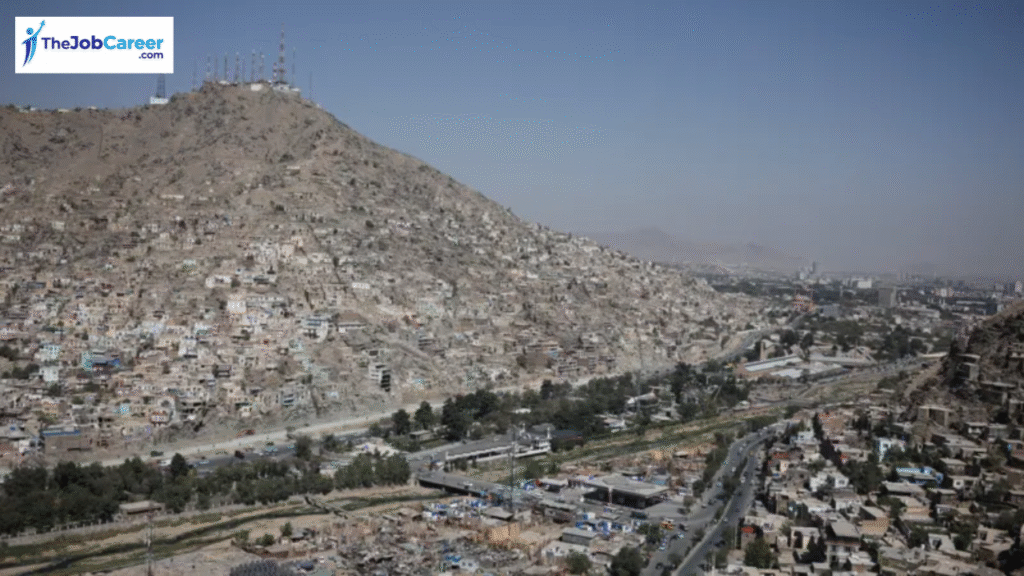
Loud explosions were also heard in parts of Kabul on Thursday night, sparking panic among residents. However, journalists who visited the scene on Friday reported no visible signs of an explosion or damage in the city, though a heavy Taliban security presence and newly erected mobile checkpoints suggested heightened alert.
Pakistan Hints at Security Measures Against “Terror Bases”
While Islamabad has neither confirmed nor denied launching any strikes inside Afghanistan, Pakistan’s military leadership hinted at taking decisive action to safeguard its security.
At a press conference in Peshawar on Friday, Major General Ahmed Sharif Chaudhry, the chief military spokesperson, alleged that Afghan soil was being used to launch terrorist attacks inside Pakistan.
“Afghanistan is being used as a base of operation for terrorism against Pakistan,” Gen. Chaudhry said. “To safeguard Pakistani lives and properties, what measures need to be taken will be taken.”
His comments appeared to justify possible cross-border operations — a move that could significantly heighten tensions between the two nuclear-armed neighbours.
Pakistan has repeatedly accused the Afghan Taliban of providing shelter to the Tehrik-i-Taliban Pakistan (TTP), a banned militant group responsible for numerous attacks across Pakistan, including assaults on security forces and civilians.
Rumours of Strike Targeting TTP Chief
Following Thursday’s explosions, rumours spread quickly across Afghan and Pakistani social media that the airstrikes were a targeted attempt to eliminate TTP leader Noor Wali Mehsud, who has been on Pakistan’s most-wanted list for years.
However, those rumours were soon countered when the TTP released an unverified voice note purportedly from Mehsud himself, in which he claimed to be alive and unhurt.
The BBC’s Afghan correspondent reported that there were no visible signs of an explosion at the suspected location in Kabul where Mehsud was allegedly staying. However, Taliban forces sealed off parts of the city overnight, conducting vehicle checks and increasing patrols — a move that many locals interpreted as a precautionary measure following the speculation.
A Fragile Relationship Under Strain
Relations between Kabul and Islamabad have long been uneasy, but the latest incident marks one of the sharpest escalations since the Taliban returned to power in August 2021.
For decades, Pakistan was seen as one of the Taliban’s principal backers, providing political and logistical support during their insurgency against U.S. and NATO forces. However, since the group seized control of Afghanistan, ties have soured over Islamabad’s accusations that the Taliban government is harbouring TTP militants, who have intensified attacks inside Pakistan.
The TTP, ideologically aligned with the Afghan Taliban, seeks to overthrow the Pakistani government and establish its own version of Islamic rule. While the Taliban leadership in Kabul denies supporting the group, Pakistan’s military has said repeatedly that TTP fighters are operating from safe havens across the Afghan border.
The Taliban’s Defence Ministry on Friday issued a strong warning to Islamabad, saying that any further attacks would be met with consequences.
“Should the situation worsen, the consequences will be attributable to the Pakistani army,” the statement read.
Taliban’s Diplomatic Balancing Act
Despite the harsh tone from the defence ministry, Afghanistan’s Foreign Minister Amir Khan Muttaqi, who was in New Delhi on an official visit at the time, struck a more conciliatory note.
Speaking to a small group of Indian journalists, Muttaqi emphasised that Afghanistan did not seek confrontation with its neighbour and urged Pakistan to resolve disputes through dialogue.
“Pakistan should not repeat this mistake,” he said. “Our issues can be solved by negotiation, not by war. We want good relations with all neighbouring countries, including Pakistan.”
Muttaqi’s remarks reflect the Taliban’s current diplomatic strategy — attempting to maintain regional ties even as tensions with Islamabad rise. The Afghan government has been seeking international recognition and is cautious not to further isolate itself amid already strained relations with Western nations.
Pakistan’s Domestic Security Concerns
Pakistan, meanwhile, faces mounting internal security challenges. The TTP has carried out hundreds of attacks in recent years, targeting police stations, army convoys, and government buildings — particularly in Khyber Pakhtunkhwa and Balochistan provinces.
Islamabad claims that many of these militants retreated into Afghanistan after Pakistan’s 2014 military operation Zarb-e-Azb, which dismantled several TTP bases in the tribal belt. Since the Taliban’s return to power, Pakistan says the TTP has regrouped and launched renewed attacks from across the border.
Earlier this year, Pakistan briefly closed key border crossings with Afghanistan after cross-border gunfire, underscoring the fragility of their relationship.
Analysts Warn of Dangerous Escalation
Regional analysts warn that any confirmed cross-border strikes could trigger a dangerous cycle of retaliation between the two neighbours.
“Both sides are dealing with their own internal pressures,” said Kabul-based political analyst Ahmad Saeedi. “Pakistan faces rising terrorism at home, and the Taliban are struggling to maintain stability. But airstrikes or military operations across the border could easily spiral out of control.”
Others note that Pakistan’s decision to expel thousands of undocumented Afghan refugees last year further strained public sentiment and deepened mistrust between the two countries.
Outlook: Tense Days Ahead
As of Friday evening, neither government had provided verifiable evidence of the alleged attack, and details remain murky. But the exchange of accusations and the heightened military rhetoric have raised fears of renewed violence along one of the world’s most volatile borders.
For now, both sides appear to be treading carefully — Islamabad avoiding direct confirmation of the strike, and Kabul balancing condemnation with calls for diplomacy. Yet, without trust and tangible cooperation on security issues, the fragile calm between Afghanistan and Pakistan could collapse quickly.