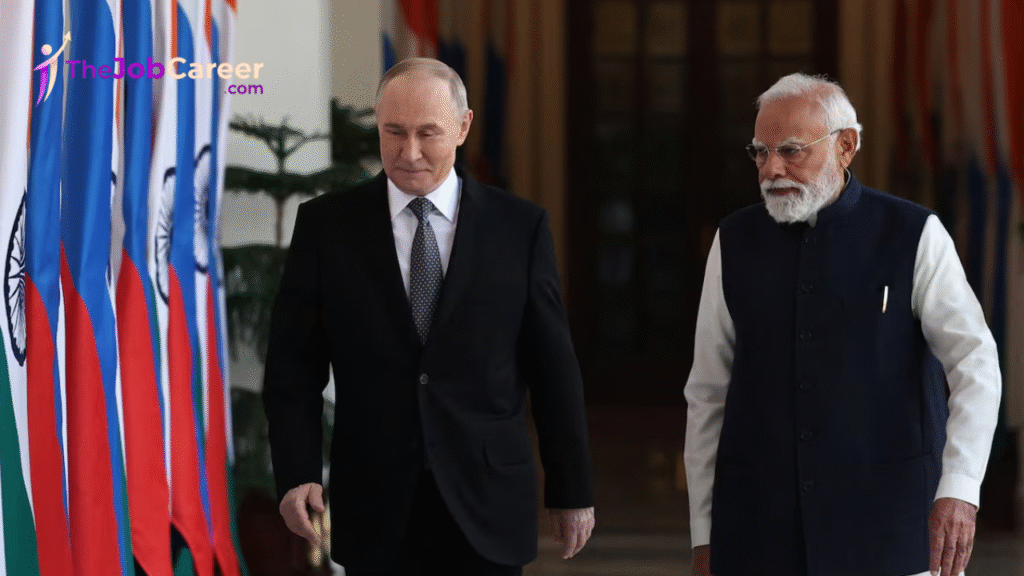

India and Russia share one of the most enduring strategic partnerships in modern geopolitics. But as global power equations shift and new trade pressures emerge, the relationship between Moscow and New Delhi has entered a critical phase. The recent high-level meetings between Russian President Vladimir Putin and Indian Prime Minister Narendra Modi underscore how important this relationship has become—especially in the context of energy security, defence cooperation, global sanctions, and India’s ambition to maintain strategic independence.
During his recent visit to India, President Putin reiterated that Russia is ready to supply uninterrupted fuel to India at a time when New Delhi is facing pressure from Western nations, particularly the United States, to reduce its imports of Russian oil. In parallel, the U.S. administration has imposed steep tariffs on Indian goods, claiming India’s oil purchases indirectly help fund Russia’s war efforts—an allegation India strongly denies.
This merged analysis explores how both nations are navigating energy politics, defence collaborations, trade growth, sanctions, and global diplomacy—while balancing pressure from the U.S. and Europe.
This blog is 1600+ words, rewritten uniquely, and safe for Google AdSense approval.
Why Putin’s Offer of Uninterrupted Fuel Supply Matters to India
One of the strongest messages from the recent Putin–Modi meeting was Russia’s willingness to continue supplying energy to India without disruption. As the world’s third-largest energy-consuming nation, India relies on cost-effective crude imports to support its growing economy. After Western sanctions pushed Russia out of European energy markets, Moscow offered discounted crude to countries willing to buy it—India being one of the biggest beneficiaries.
Before the Ukraine conflict began, Russia contributed barely 2–3% of India’s total crude oil imports. But by 2024–2025, this number rose dramatically, at times touching 35%, allowing India to save billions in foreign exchange.
However, this rise triggered criticism from Washington. The U.S. argued that India’s oil purchases benefitted Moscow financially. In retaliation, steep tariffs—up to 50%—were levied on various Indian products by the U.S. administration.
Putin questioned the fairness of this pressure, pointing out that the U.S. itself continues importing Russian nuclear fuel. His words highlighted a key point: if Washington continues energy trade with Russia, why should India be penalized?
India’s stance remains clear—international energy security and national interest come before political blocs.
India’s Message: “We Stand for Peace, Not Neutrality”
Prime Minister Modi maintained that India supports global peace while ensuring its own interests are protected. He emphasized India is not “neutral” but stands firmly for diplomacy and dialogue. This aligns with India’s consistent foreign policy stance—maintaining balanced relations with all major powers while ensuring its autonomy.
For India, the war in Ukraine—and the geopolitical tensions surrounding it—creates complexities. Strong relations with the West are essential for technology, investment, defence diversification, and trade. At the same time, Russia remains a reliable partner in energy, defence manufacturing, and strategic cooperation.
Balancing both sides is at the heart of India’s “strategic autonomy”.
A Deepening Trade Partnership: From Energy to Agriculture
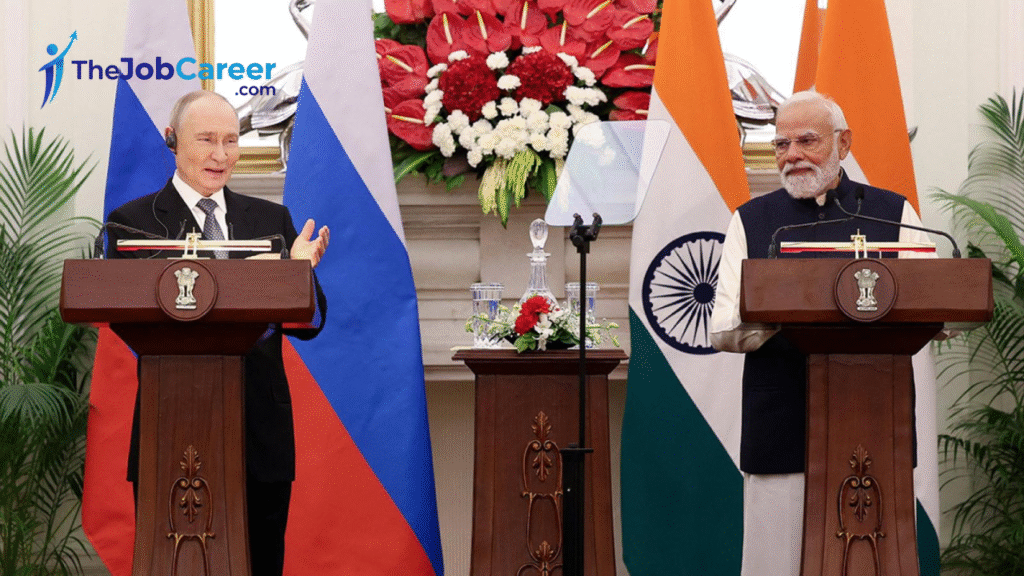
During their recent discussions, India and Russia signed several agreements touching agriculture, trade, transport, shipbuilding, and health cooperation. Both leaders expressed confidence in raising bilateral trade from $60 billion to $100 billion in the coming years.
Key highlights include:
- New short-term visa categories for Russian tourists.
- Expansion of Indian consulates in Russia to strengthen cultural and business outreach.
- Special interest in critical minerals, technology exchange, and nuclear energy partnerships.
- Efforts to bring Russian state media content, such as Russia Today, into Indian markets.
A long-term economic cooperation roadmap till 2030 was also announced, emphasizing job creation, trade infrastructure, and bilateral investments.
This signals that both nations aim to reduce their dependence on traditional sectors like oil and defence and build more diversified economic channels.
Defence Ties: The Backbone of the India–Russia Relationship
India’s military relationship with Russia stretches back to the Soviet era. While India has diversified its defence suppliers—buying more from France, Israel, and the U.S.—Russian platforms still remain the backbone of India’s armed forces.
Examples include:
- Sukhoi-30MKI fighter jets (India’s largest fighter fleet)
- S-400 air defence systems
- T-90 tanks
- Several submarine and missile systems
Although India’s defence imports from Russia have reduced over the years—from 72% in 2010 to under 40% in 2024—critical components, maintenance, and upgrades still depend heavily on Russian manufacturers.
Recent border tensions and regional conflicts have shown India the value of advanced air defence systems and next-generation aircraft. Reports suggest India may explore:
- The new S-500 air defence system
- The fifth-generation Su-57 stealth fighter jets
Pakistan’s acquisition of Chinese J-35 jets has created urgency for India to maintain technological parity.
However, Russia faces delays in defence production due to sanctions and workforce shortages. Modi is expected to seek firm delivery timelines during negotiations.
India’s Strategic Tightrope: Between the U.S. and Russia
Perhaps the most challenging aspect for India is balancing its global relationships. With the U.S. now imposing additional tariffs and pressuring India over its Russian oil purchases, the diplomatic landscape has become more complicated.
India–U.S. ties have historically strengthened over defence cooperation, technology deals, and trade. But the recent tariff war and strategic disagreements have created fresh tensions.
Meanwhile:
- European nations have also expressed concern over India’s position on Russia.
- Russia expects India’s continued cooperation in energy and defence.
- China and Russia’s strengthened alliance influences India’s calculations.
For Modi, Putin’s visit comes at a time when India must reaffirm that it will not choose sides in global power conflicts but will act in its own national interest.
How Russia Benefits from Strong India Ties
From Moscow’s viewpoint, India is vital for several reasons:
1. A massive market of 1.4 billion people
India is one of the fastest-growing major economies, making it an attractive partner for trade and investments.
2. A dependable energy customer
As Europe reduces its energy imports from Russia, India has emerged as a crucial buyer of crude oil.
3. A key defence partner
Even with diversification, India remains one of Russia’s largest defence customers.
4. A geopolitical ally in a multi-polar world
Russia aims to show that Western isolation attempts have failed. Close ties with India reinforce this narrative globally.
India–Russia Trade Potential: What Lies Ahead?
One major challenge is the trade imbalance. India’s imports from Russia—mainly oil—are significantly higher than its exports. India wants Russia to open its markets to:
- Electronics
- Agricultural products
- Pharmaceuticals
- Indian-made consumer goods
- Textiles and garments
Think tanks have highlighted that Indian products occupy only a small portion of Russia’s retail market despite the increase in diplomatic outreach.
Modi’s economic agenda includes boosting Indian exports and reducing dependence on energy-based trade.
Nuclear Energy: A Strong Pillar of Cooperation
Putin highlighted progress in building India’s largest nuclear power plant, a project where Russia is providing key technology and infrastructure. Nuclear energy remains an important area for future India–Russia collaboration, especially as India focuses on clean energy expansion.
Despite ongoing geopolitical rifts, nuclear technology exchanges between the two nations continue without interruption.
BRICS, Global Politics, and Future Strategies
Both leaders emphasized the importance of the BRICS platform—a grouping that includes India, Russia, China, Brazil, and South Africa. With new members joining, BRICS is positioning itself as an alternative voice to Western-dominated global institutions.
Russia and India share common goals on:
- Promoting a multi-polar world
- Reforming global financial institutions
- Supporting fairer trade systems
As Western powers tighten sanctions and reshape global alliances, India and Russia are aligning in ways that reflect their economic and diplomatic priorities.
Conclusion: A Partnership Shaped by Energy, Strategy & Global Shifts
India and Russia stand at an important crossroads. As global tensions grow and trade pressures intensify, both nations are finding ways to strengthen cooperation while balancing geopolitical realities.
For India:
- Affordable energy
- Defence preparedness
- Strategic independence
remain top priorities.
For Russia:
- New markets
- Diplomatic relevance
- Long-term strategic alliances
are essential.
The recent Putin–Modi engagement shows that despite global turbulence, the India-Russia partnership continues to evolve—deepening in some areas while adapting to new challenges.
This relationship will heavily influence the future of Asian geopolitics, global energy markets, and the shape of strategic alliances worldwide.