

Sustainable packaging has become one of the fastest-growing trends in India’s consumer, retail, and manufacturing sectors. As environmental awareness increases and businesses commit to reducing plastic waste, the country is entering a new era where eco-friendly packaging is not just an option—it is becoming a necessity. From small startups to India’s biggest FMCG brands, everyone is now exploring greener alternatives that reduce pollution, cut carbon emissions, and support a circular economy.
This article explores why sustainable packaging is growing rapidly in India, what innovations are driving this change, how government rules are accelerating the shift, and what the future of eco-friendly packaging will look like over the next decade.
Why Sustainable Packaging Is Growing in India
1. India’s Plastic Waste Crisis
India generates millions of tonnes of plastic waste every year, and single-use plastics contribute heavily to pollution in rivers, oceans, and landfills. With rising public concern and widespread global awareness, companies are under pressure to reduce their environmental footprint. Consumers now prefer brands that use eco-friendly packaging, especially in urban centres like Delhi, Mumbai, Bengaluru, and Hyderabad.
2. Government Policies and Bans
The Indian government has announced strict rules against single-use plastics. These regulations push companies across sectors—including food, retail, cosmetics, and e-commerce—to adopt greener packaging materials. The Extended Producer Responsibility (EPR) policy requires brands to take responsibility for the plastic they use and ensure it is recycled or reused.
3. Consumer Demand for Eco-Friendly Products
Today’s buyers, especially millennials and Gen Z, are highly conscious of the environmental impact of packaging. Many customers make purchasing decisions based on sustainability. Brands using biodegradable, recyclable, or compostable packaging earn higher trust and loyalty.
4. Growth of E-Commerce
The rise of online shopping has increased packaging waste significantly. E-commerce companies in India are now shifting toward recycled paper, compostable mailers, and minimal packaging to reduce the environmental impact of their deliveries.
Popular Types of Sustainable Packaging in India
India has experienced a boom in green packaging innovation. These are the most popular eco-friendly materials currently adopted by companies:
1. Biodegradable Packaging
Made from natural sources like starch, corn, and sugarcane fibre, biodegradable materials break down easily in the environment without releasing harmful chemicals.
2. Recycled Paper and Cardboard
Paper-based packaging is one of the most cost-effective and widely used eco-friendly options. Many FMCG brands have replaced plastic wrappers with multi-layered paper packaging.
3. Compostable Packaging
Compostable materials break down into organic components within weeks. Startups across India are producing compostable carry bags, cutlery, and pouches suitable for food and retail products.
4. Mushroom Packaging
This innovative packaging is made from agricultural waste and mycelium. It is lightweight, strong, biodegradable, and has gained attention for replacing thermocol in electronics shipping.
5. Plant-Based Plastics (Bioplastics)
Bioplastics made from corn starch, seaweed, or algae are becoming an attractive choice for companies wanting plastic-like durability but with fewer environmental costs.
6. Glass and Metal Reusable Packaging
Premium brands in food, skincare, and beverages are shifting back to glass jars and metal containers, which are fully recyclable and reusable.
Industries Driving the Sustainable Packaging Movement in India
1. FMCG (Fast-Moving Consumer Goods)
Companies like Hindustan Unilever, ITC, and Tata Consumer Products are replacing plastic with paper-based materials and investing heavily in recycling programs.
2. Food Delivery & Restaurants
Cloud kitchens and food delivery players such as Swiggy and Zomato have encouraged restaurants to shift to biodegradable containers and cutlery.
3. Cosmetics & Skincare
Beauty brands now prefer glass bottles, metal tins, and recycled paper packaging to appeal to conscious customers.
4. Grocery & Retail
Supermarkets and retail chains are adopting compostable carry bags, cloth bags, and reusable packaging systems.
5. E-Commerce
Major online platforms are using paper-based fillers, eco-friendly tape, and recyclable mailers to reduce plastic waste.
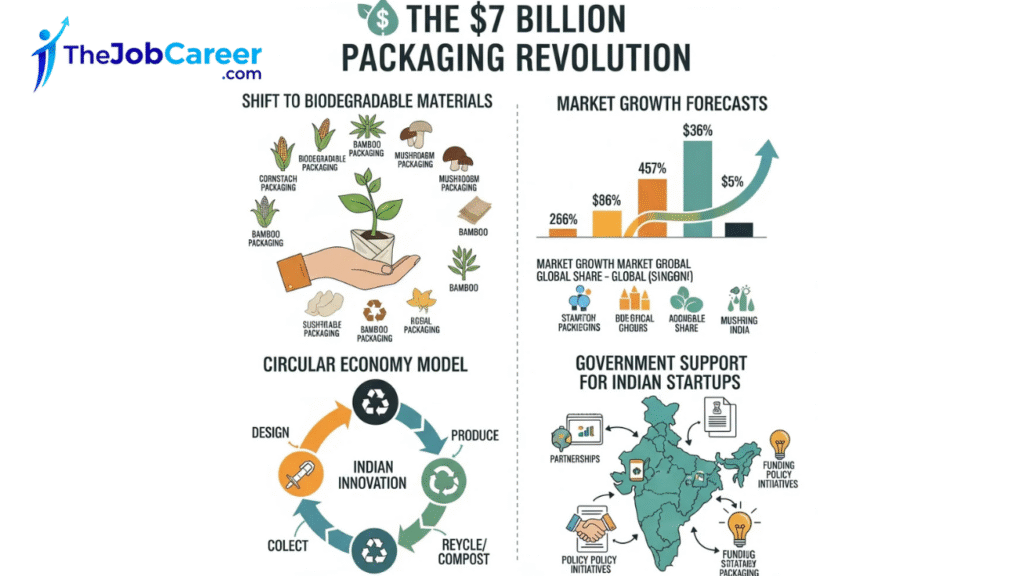
How Brands Are Adopting Eco-Friendly Packaging
1. Minimalist Packaging
Brands are reducing unnecessary layers, decorations, and plastic coatings. This approach lowers waste and reduces the overall carbon footprint.
2. Refillable Containers
Several beauty and home-care brands now offer refill stations, reducing plastic consumption significantly.
3. Returnable Packaging
Some e-commerce platforms are testing pilot programs in which customers can return packaging materials for reuse.
4. Upcycled Packaging
Startups are creating high-quality packaging from discarded materials such as textile waste, coconut husks, and agricultural waste.
Challenges in India’s Sustainable Packaging Journey
Despite rapid growth, India still faces obstacles in adopting eco-friendly packaging:
1. Higher Costs
Sustainable materials are often more expensive than single-use plastics. Small businesses struggle to make the switch without financial support.
2. Limited Availability of Alternatives
Not all eco-friendly materials are easily available across India, especially in rural and semi-urban regions.
3. Lack of Recycling Infrastructure
Although India recycles a large percentage of plastic waste, many cities lack advanced recycling and composting facilities.
4. Consumer Behaviour
Many consumers still prefer low-cost plastic packaging due to convenience and affordability.
Future Trends in Sustainable Packaging in India
1. AI and Smart Packaging
Artificial intelligence will help optimize packaging designs for material efficiency and waste reduction.
2. Growth of Plant-Based Materials
Bioplastics derived from seaweed, bamboo, and agricultural waste will become more common.
3. Large-Scale Recycling Innovations
India will invest heavily in recycling technology, including chemical recycling, which breaks down plastics into reusable raw materials.
4. Zero-Waste Packaging
More brands will adopt packaging that completely decomposes or returns to nature without causing pollution.
5. Circular Economy
India is moving toward a model where products are designed to be recycled, reused, or repurposed back into production cycles.
6. Packaging-as-a-Service
Companies may offer subscription-based refill programs for groceries, detergents, and personal care products.
Why Sustainable Packaging Matters for India’s Future
Sustainable packaging is not just an environmental trend—it is a core part of India’s long-term economic growth. Here’s why:
- It reduces pollution and protects natural ecosystems.
- It supports India’s global climate commitments.
- It improves the brand image and customer loyalty.
- It encourages innovation and creates new business opportunities.
- It helps protect future generations from the impacts of climate change.
As India becomes one of the fastest-growing economies, sustainable packaging will play a crucial role in shaping a cleaner, greener, and more responsible future.