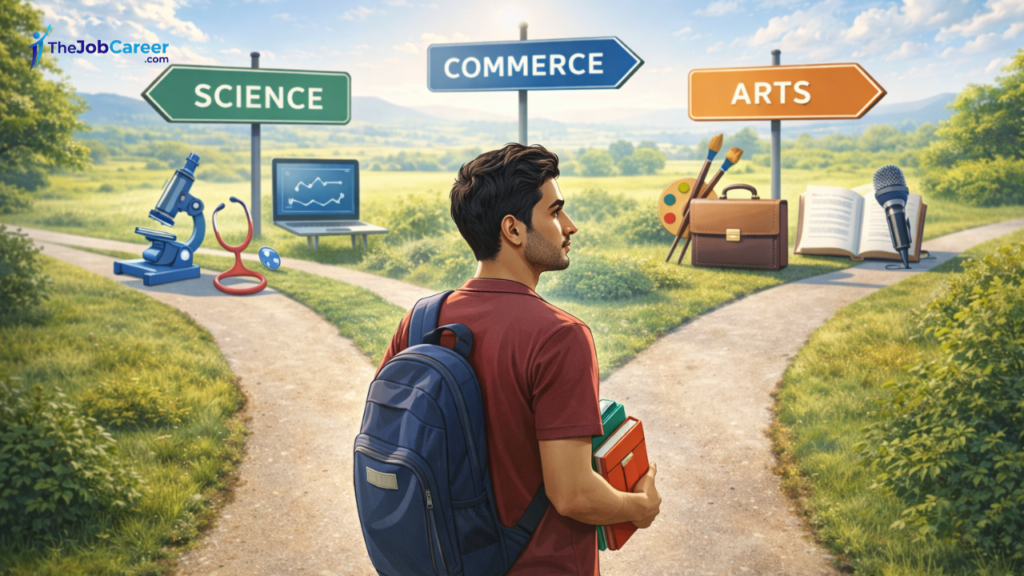

Completing 12th standard is one of the most significant milestones in a student’s academic journey. It marks the transition from school to higher education and professional life. However, this transition also brings a critical decision that can shape your entire future: choosing the right career path.
Every year, millions of students across India complete their 12th standard and face the overwhelming question: What next? The pressure from family, peers, and society often adds to the confusion. Some students have clear goals, while many others are uncertain about which direction to take.
This comprehensive guide is designed to help you navigate through the maze of career options available after 12th standard. Whether you are from the Science, Commerce, or Arts stream, this article will provide you with detailed insights into various career paths, emerging fields, and practical tips for making an informed decision.
Understanding the Importance of Career Choice
Before diving into specific career options, it is essential to understand why this decision matters so much.
Long-Term Impact on Your Life
The career path you choose after 12th will determine what you study in college, the kind of work you will do for the next 30-40 years, your earning potential, and even your overall life satisfaction. While career changes are possible later in life, they often require significant effort, time, and sometimes financial investment.
Choosing a career aligned with your interests, skills, and values increases the likelihood of professional success and personal fulfillment. On the other hand, selecting a path solely based on external pressure or trends can lead to dissatisfaction and regret.
The Reality of Career Decisions in India
In India, career choices are often influenced by parental expectations, societal norms, and perceived prestige. Engineering and Medicine have traditionally been considered the most desirable career paths for Science students, while Commerce students are often expected to pursue Chartered Accountancy or MBA, and Arts students face limited recognition despite the vast opportunities in creative and social sciences.
However, the job market has evolved significantly in recent years. The rise of technology, globalization, and changing consumer preferences have created numerous new career opportunities. Fields like data science, digital marketing, content creation, environmental science, and design thinking are now as lucrative and respected as traditional career paths.
Understanding this shift is crucial. Your career choice should be based on current and future market realities, not outdated perceptions.
Stream-Wise Career Options After 12th
Each academic stream offers a unique set of career opportunities. Let us explore them in detail.
Career Options for Science Stream Students
Science students have one of the widest ranges of career opportunities. Whether you have studied Physics, Chemistry, Mathematics (PCM) or Physics, Chemistry, Biology (PCB), there are numerous paths available.
Engineering and Technology Fields
Engineering remains one of the most popular choices for PCM students. India produces lakhs of engineers every year across various specializations.
Popular Engineering Branches:
Computer Science and Engineering: This branch focuses on software development, programming, algorithms, and computer systems. With the booming IT industry, CSE graduates are in high demand. Average starting salary ranges from 4 to 12 lakhs per annum, with top companies offering packages of 20 to 50 lakhs for exceptional candidates.
Information Technology: Similar to CSE but more application-focused. IT graduates work on software development, web technologies, and database management.
Electronics and Communication Engineering: This field deals with electronic devices, communication systems, and signal processing. Career opportunities exist in telecommunications, embedded systems, and electronics manufacturing.
Mechanical Engineering: One of the oldest engineering branches, it covers the design, manufacturing, and maintenance of mechanical systems. Jobs are available in automotive, aerospace, energy, and manufacturing sectors.
Civil Engineering: Focuses on infrastructure development, construction, and urban planning. With government initiatives like Smart Cities and infrastructure projects, civil engineers are in demand.
Electrical Engineering: Deals with electrical systems, power generation, and distribution. Opportunities exist in energy sectors, power plants, and electrical equipment manufacturing.
Chemical Engineering: Involves the study of chemical processes and industrial production. Careers are available in pharmaceuticals, petrochemicals, and food processing industries.
Aerospace Engineering: For those interested in aircraft and spacecraft design. Opportunities exist in ISRO, DRDO, HAL, and private aerospace companies.
Biotechnology Engineering: Combines biology and technology. Careers include genetic engineering, pharmaceuticals, and agricultural biotechnology.
Admission to top engineering colleges like IITs, NITs, and IIITs is through JEE Main and JEE Advanced. State-level entrance exams also provide admission to regional engineering colleges.
Medical and Healthcare Careers
For PCB students, medical and healthcare fields offer prestigious and rewarding career options.
MBBS (Bachelor of Medicine, Bachelor of Surgery): The most traditional path for medical aspirants. After completing MBBS, you can practice as a general physician or pursue specialization through MD or MS. Admission is through NEET-UG.
BDS (Bachelor of Dental Surgery): Focuses on dental health and treatment. Dentists can practice independently or work in hospitals. Admission is through NEET-UG.
BAMS (Bachelor of Ayurvedic Medicine and Surgery): For those interested in traditional Indian medicine. BAMS graduates can practice Ayurveda or pursue research.
BHMS (Bachelor of Homeopathic Medicine and Surgery): Focuses on homeopathic treatment methods.
Veterinary Science (BVSc): For animal lovers, this field offers opportunities to work as veterinary doctors treating animals.
Pharmacy (B.Pharm): A four-year course focusing on pharmaceutical sciences. Pharmacists work in hospitals, pharmaceutical companies, or drug regulatory authorities.
Nursing (B.Sc Nursing): Nursing is a noble profession with high demand globally. Nurses work in hospitals, clinics, and healthcare institutions.
Physiotherapy (BPT): Physiotherapists help patients recover from injuries and manage chronic conditions through physical therapy.
Occupational Therapy: Focuses on helping patients regain daily living skills after illness or injury.
Biotechnology (B.Sc/B.Tech): A multidisciplinary field combining biology, chemistry, and technology. Careers include research, pharmaceuticals, and genetic engineering.
Medical careers require dedication, extensive study, and a genuine passion for helping people. The profession is highly respected and financially rewarding in the long term.
Pure Sciences and Research
Students interested in theoretical knowledge and research can pursue undergraduate degrees in pure sciences.
B.Sc in Physics, Chemistry, or Mathematics: A three-year undergraduate program. After B.Sc, you can pursue M.Sc, and then Ph.D. for a research career. Opportunities exist in academia, research institutions like ISRO, DRDO, and CSIR.
B.Sc in Biological Sciences: Includes specializations like Microbiology, Zoology, Botany, and Genetics. Research opportunities exist in pharmaceuticals, agriculture, and environmental science.
B.Sc in Environmental Science: Focuses on environmental conservation, pollution control, and sustainable development. Growing awareness about climate change has increased demand for environmental scientists.
B.Sc in Forensic Science: For students interested in crime investigation and forensic analysis. Careers exist in police departments, forensic labs, and legal institutions.
Pure science careers often require higher education (M.Sc and Ph.D.) for better opportunities. While initial salaries may be moderate, experienced researchers and professors earn well and contribute significantly to scientific advancement.
Technology and Computer Science Careers
Beyond traditional engineering, several technology-focused career options are available.
BCA (Bachelor of Computer Applications): A three-year course focusing on computer programming and applications. Ideal for students without mathematics in 12th but interested in IT careers.
B.Sc in Computer Science or IT: Similar to BCA but with a more theoretical approach.
Data Science and Artificial Intelligence: Emerging fields with high demand. Many colleges now offer specialized undergraduate programs in AI and Data Science.
Cybersecurity: With increasing cyber threats, cybersecurity professionals are in high demand. Specialized courses and certifications are available.
Career Options Table for Science Students
| Career Path | Duration | Entrance Exam | Avg. Starting Salary | Growth Potential |
|---|---|---|---|---|
| B.Tech/B.E. (Engineering) | 4 years | JEE Main/Advanced | 4-12 lakhs | High |
| MBBS | 5.5 years | NEET-UG | 6-10 lakhs (initial) | Very High |
| B.Pharm | 4 years | NEET/State exams | 3-6 lakhs | Medium-High |
| BDS | 5 years | NEET-UG | 4-8 lakhs | High |
| B.Sc (Pure Sciences) | 3 years | University exams | 2-4 lakhs | Medium (Higher with M.Sc/Ph.D.) |
| BCA | 3 years | University exams | 3-6 lakhs | High |
| B.Sc Nursing | 4 years | NEET/State exams | 3-5 lakhs | Medium-High |
| Biotechnology | 4 years | JEE/University exams | 3-7 lakhs | Medium-High |
Career Options for Commerce Stream Students
Commerce students have diverse opportunities in business, finance, accounting, and management.
Professional Courses
Chartered Accountancy (CA): One of the most prestigious career paths for commerce students. CAs handle auditing, taxation, and financial advisory services. The course is challenging and requires dedication, but the financial rewards and professional respect are significant. Qualified CAs earn anywhere from 6 to 20 lakhs per annum, with senior CAs earning significantly more.
Company Secretary (CS): Company Secretaries ensure that companies comply with legal and regulatory requirements. The course is conducted by ICSI and involves three levels of examinations.
Cost and Management Accountant (CMA): CMAs specialize in cost accounting, financial management, and strategic planning. The course is offered by ICMAI.
Undergraduate Degree Programs
B.Com (Bachelor of Commerce): A three-year undergraduate degree covering subjects like accounting, economics, business law, and taxation. After B.Com, students can pursue CA, MBA, or M.Com.
BBA (Bachelor of Business Administration): A management-focused undergraduate program. BBA graduates often pursue MBA for better career opportunities. Specializations include Marketing, Finance, Human Resources, and International Business.
B.Com (Hons): An honors degree in commerce with a more rigorous curriculum than regular B.Com. It is offered by top universities like Delhi University and provides better career prospects.
Economics and Statistics
B.A. (Hons) Economics: For students interested in economic theory, policy analysis, and development economics. Economics graduates work in government, research institutions, banks, and international organizations.
B.Sc in Statistics: Focuses on data analysis and statistical methods. Statisticians are in demand in market research, pharmaceuticals, insurance, and data analytics.
Law and Legal Studies
B.Com LLB (Integrated Law Program): A five-year integrated course combining commerce and law. Corporate lawyers, especially those with commerce backgrounds, are in high demand.
Banking and Finance
Many commerce students pursue careers in banking through entrance exams for public sector banks like IBPS PO, SBI PO, and RBI Grade B. Private sector banks and financial institutions also hire commerce graduates for various roles.
Career Options Table for Commerce Students
| Career Path | Duration | Entrance Exam | Avg. Starting Salary | Growth Potential |
|---|---|---|---|---|
| Chartered Accountancy (CA) | 4-5 years | CA Foundation/Inter/Final | 6-20 lakhs | Very High |
| B.Com | 3 years | University exams | 2.5-5 lakhs | Medium (Higher with CA/MBA) |
| BBA | 3 years | University exams | 3-6 lakhs | Medium-High |
| Company Secretary (CS) | 3-4 years | CS Foundation/Executive/Professional | 5-12 lakhs | High |
| B.Com LLB | 5 years | CLAT/University exams | 4-10 lakhs | High |
| CMA | 3-4 years | CMA Foundation/Intermediate/Final | 4-10 lakhs | High |
| Banking (IBPS PO) | After graduation | IBPS PO/SBI PO | 4-7 lakhs | Medium-High |
Career Options for Arts Stream Students
Arts students often face misconceptions that their career options are limited. In reality, the Arts stream offers some of the most diverse and creative career paths.
Humanities and Social Sciences
B.A. (Bachelor of Arts): A three-year undergraduate program with specializations in subjects like History, Political Science, Sociology, Psychology, Philosophy, English Literature, and Geography.
Popular Specializations:
Psychology: Study of human behavior and mental processes. Psychologists work in hospitals, schools, corporate HR departments, and counseling centers. With mental health awareness growing, demand for psychologists is increasing.
Sociology: Study of society, social behavior, and social institutions. Sociologists work in social research, NGOs, policy planning, and academia.
Political Science: Focuses on political systems, governance, and international relations. Graduates can pursue careers in civil services, journalism, and public policy.
History: For those interested in historical research, archaeology, and heritage conservation. Historians work in museums, research institutions, and academia.
English Literature: Focuses on literary analysis and creative writing. Careers include teaching, content writing, journalism, and publishing.
Geography: Study of physical and human geography. Geographers work in urban planning, environmental management, and GIS technology.
Mass Communication and Journalism
BJMC (Bachelor of Journalism and Mass Communication): A three-year course focusing on journalism, media studies, and communication. Journalists work in print media, television, digital media, and public relations.
Specializations include Print Journalism, Broadcast Journalism, Digital Media, Advertising, and Public Relations. Starting salaries range from 3 to 7 lakhs per annum, with experienced journalists earning significantly more.
Design and Creative Arts
B.Des (Bachelor of Design): For students interested in design thinking and creative problem-solving. Specializations include Fashion Design, Interior Design, Graphic Design, Product Design, and Animation.
Fashion Design: India’s fashion industry is booming. Fashion designers work with clothing brands, fashion houses, or start their own labels.
Graphic Design: Graphic designers create visual content for advertising, websites, and branding. With digital marketing growing, demand for graphic designers is high.
Animation and VFX: The animation industry in India is expanding rapidly. Animators work in film production, gaming, advertising, and web design.
Law and Legal Studies
B.A. LLB (Integrated Law Program): A five-year integrated course. Lawyers work in courts, corporate legal departments, or as independent practitioners. Admission is through CLAT and other law entrance exams.
Education and Teaching
B.Ed (Bachelor of Education): For students interested in teaching. After completing a B.A. and B.Ed, you can become a school teacher. TGT (Trained Graduate Teacher) and PGT (Post Graduate Teacher) positions are available in government and private schools.
Hotel Management and Hospitality
BHM (Bachelor of Hotel Management): A four-year course focusing on hotel operations, culinary arts, and hospitality services. Careers exist in hotels, restaurants, cruise ships, and event management.
Social Work and Development
BSW (Bachelor of Social Work): For students passionate about social causes and community development. Social workers work in NGOs, government welfare programs, and international development organizations.
Career Options Table for Arts Students
| Career Path | Duration | Entrance Exam | Avg. Starting Salary | Growth Potential |
|---|---|---|---|---|
| B.A. (Humanities) | 3 years | University exams | 2-4 lakhs | Medium (Higher with specialization) |
| BJMC (Journalism) | 3 years | University exams | 3-7 lakhs | High |
| B.Des (Design) | 4 years | UCEED/NID/NIFT | 4-8 lakhs | High |
| B.A. LLB | 5 years | CLAT | 4-10 lakhs | Very High |
| B.Ed (Teaching) | 2 years (after B.A.) | State exams | 3-5 lakhs | Medium |
| BHM (Hotel Management) | 4 years | NCHM JEE | 3-6 lakhs | Medium-High |
| BSW (Social Work) | 3 years | University exams | 2-4 lakhs | Medium |
| Psychology (B.A./B.Sc) | 3 years | University exams | 3-6 lakhs | High (with M.A./M.Sc) |
High-Paying Careers vs Passion-Based Careers
One of the most common dilemmas students face is choosing between high-paying careers and passion-based careers. Let us understand both perspectives.
High-Paying Careers: Financial Stability
High-paying careers are often associated with financial security, social status, and comfortable living. Fields like engineering (especially computer science), medicine, investment banking, management consulting, and corporate law offer lucrative salaries even at the entry level.
Advantages of High-Paying Careers:
Financial Independence: High salaries provide financial security and the ability to support your family, invest, and enjoy a comfortable lifestyle.
Social Recognition: In Indian society, high-earning professions are often associated with success and prestige.
Career Growth: Many high-paying fields offer structured career growth with clear promotion paths and incremental salary increases.
Challenges of High-Paying Careers:
High Stress: Many high-paying jobs come with long working hours, tight deadlines, and high pressure.
Limited Personal Time: Jobs in fields like investment banking or corporate law often require 60-80 hour work weeks, leaving little time for personal life.
Risk of Burnout: Without genuine interest, high-paying jobs can lead to burnout and dissatisfaction.
Passion-Based Careers: Personal Fulfillment
Passion-based careers are those aligned with your interests, talents, and values. These could include creative fields like writing, music, art, sports, social work, or environmental conservation.
Advantages of Passion-Based Careers:
Job Satisfaction: When you love what you do, work feels less like a burden and more like a fulfilling activity.
Creativity and Innovation: Passion-driven work often leads to creative breakthroughs and innovative ideas.
Long-Term Sustainability: You are more likely to stay committed and excel in a field you are passionate about.
Challenges of Passion-Based Careers:
Financial Uncertainty: Many passion-based careers, especially in creative fields, may not offer high salaries initially. Earnings can be irregular.
Lack of Structure: Fields like freelance writing, art, or music may lack the job security and structured growth of traditional careers.
Societal Pressure: In India, choosing unconventional careers often invites skepticism and pressure from family and society.
Finding the Balance
The ideal career choice lies in finding a balance between financial stability and personal passion. Here are some strategies:
Monetize Your Passion: Many creative fields now offer good earning potential due to digital platforms. Content creators, designers, and writers can earn well if they build their brand.
Side Projects: If you choose a high-paying career for financial security, pursue your passion as a side project. Many professionals engage in hobbies like photography, writing, or music alongside their main careers.
Upskilling and Diversification: Acquire skills that make you valuable in the job market while staying connected to your interests. For instance, a literature graduate can pursue content writing or digital marketing, combining creativity with financial stability.
Long-Term Vision: Some careers require initial struggle but offer great rewards later. For example, actors, musicians, and entrepreneurs may face challenges initially but achieve significant success with persistence.
Emerging Career Fields in 2026
The job market is constantly evolving. New technologies, societal changes, and global trends are creating career opportunities that did not exist a decade ago. Here are some emerging fields that offer promising career prospects in 2026.
Technology and Digital Fields
Artificial Intelligence and Machine Learning: AI is transforming industries from healthcare to finance. AI specialists, machine learning engineers, and data scientists are in high demand. Companies are willing to pay premium salaries to skilled AI professionals.
Cybersecurity: With increasing digitalization, cybersecurity threats are growing. Cybersecurity analysts, ethical hackers, and information security managers are essential for protecting data and systems.
Data Science and Analytics: Every industry now relies on data-driven decision-making. Data scientists analyze large datasets to extract insights and support business strategies.
Blockchain and Cryptocurrency: Blockchain technology is revolutionizing finance, supply chain, and digital identity. Blockchain developers and cryptocurrency analysts are emerging career roles.
Cloud Computing: As businesses move to cloud-based infrastructure, cloud architects and cloud engineers are in demand. Certifications like AWS, Azure, and Google Cloud are valuable.
Creative and Content Industries
Content Creation and Influencing: Social media platforms like YouTube, Instagram, and LinkedIn have created opportunities for content creators. Influencers, vloggers, and digital marketers earn through brand collaborations and advertisements.
UX/UI Design: User experience and user interface designers create intuitive digital products. With the rise of apps and websites, UX/UI designers are highly sought after.
Game Development: The gaming industry in India is booming. Game designers, developers, and animators are in demand.
Podcasting and Audio Content: Podcasting is growing rapidly. Podcast producers, audio editors, and voice artists have new career opportunities.
Sustainability and Environmental Careers
Renewable Energy: With a global focus on sustainability, careers in solar energy, wind energy, and electric vehicles are expanding. Renewable energy engineers and consultants are needed.
Environmental Consulting: Companies need environmental consultants to comply with regulations and implement sustainable practices.
Urban Planning and Smart Cities: As cities grow, urban planners are essential for sustainable development.
Healthcare and Wellness
Mental Health Counseling: Awareness about mental health is increasing. Psychologists, counselors, and therapists are in demand.
Telemedicine and Health Tech: Digital health platforms are growing. Careers in health tech, telemedicine, and medical app development are emerging.
Nutrition and Dietetics: With rising health consciousness, nutritionists and dietitians are sought after.
Other Emerging Fields
E-commerce and Digital Marketing: Online shopping is booming. Digital marketers, SEO specialists, and e-commerce managers are essential.
Sports Management and Analytics: Sports analytics, sports marketing, and event management are growing fields.
Supply Chain and Logistics: E-commerce growth has increased demand for supply chain managers and logistics experts.
Career Counseling Resources and Tools
Making the right career choice requires self-awareness, research, and often, professional guidance. Here are some valuable resources.
Online Career Assessment Tools
Aptitude Tests: Online platforms like CareerGuide, Mettl, and Mindler offer aptitude tests that assess your strengths, interests, and personality traits. These tests provide career suggestions based on your profile.
Personality Tests: Tools like the Myers-Briggs Type Indicator (MBTI) or Holland Code (RIASEC) help you understand your personality type and suitable career paths.
Professional Career Counselors
Many schools, colleges, and private organizations offer career counseling services. Professional counselors conduct one-on-one sessions, help you explore options, and create personalized career plans.
Organizations like iDreamCareer, CareerGuide, and CareerLauncher provide counseling services tailored to Indian students.
Government and Institutional Resources
National Career Service Portal (NCS): A government portal offering career counseling, job search, and skill development resources.
University Career Cells: Most universities have career guidance cells that organize workshops, seminars, and counseling sessions.
Online Platforms and Communities
YouTube Channels: Channels like Career Anna, Apna College, and Unacademy offer free career guidance videos.
Social Media Groups: Join Facebook groups, LinkedIn communities, and Telegram channels focused on career advice and job opportunities.
Podcasts: Listen to career-focused podcasts featuring industry experts, successful professionals, and career coaches.
Books and Reading Materials
“What Color is Your Parachute?” by Richard N. Bolles: A classic guide on career planning and job hunting. “Designing Your Life” by Bill Burnett and Dave Evans: Offers practical advice on building a fulfilling career. “Range: Why Generalists Triumph in a Specialized World” by David Epstein: Challenges the notion that early specialization is always best.
Practical Steps to Choose the Right Career
Now that you have explored various career options, emerging fields, and resources, here are practical steps to make an informed decision.
Step 1: Self-Assessment
Take time to reflect on your interests, strengths, weaknesses, and values. Ask yourself:
What subjects do I enjoy studying? What activities make me lose track of time? Am I more inclined towards analytical tasks or creative work? Do I prefer working with people or working independently? What are my long-term life goals?
Self-awareness is the foundation of a good career choice.
Step 2: Research Thoroughly
Once you have a few career options in mind, research them in detail. Look into:
Job roles and responsibilities Educational requirements and courses Average salaries and growth prospects Job market demand Work-life balance and working conditions
Talk to professionals working in those fields. Seek advice from seniors, alumni, and mentors.
Step 3: Explore Multiple Options
Do not limit yourself to one career path. Explore at least 3-5 options before making a decision. Attend career fairs, webinars, and workshops.
If possible, take short-term courses, internships, or volunteer in fields of interest. Practical exposure helps you understand whether you genuinely enjoy the work.
Step 4: Consider Practical Factors
While passion and interest are important, also consider practical factors:
Financial Requirements: Some courses require significant investment. Assess your financial situation. Location and Accessibility: Consider whether you are willing to relocate for education or work. Family Circumstances: In some cases, family responsibilities may influence your decision. Job Market Reality: Choose fields with genuine job opportunities, not just theoretical prospects.
Step 5: Make an Informed Decision
After thorough research and self-assessment, make your decision confidently. Remember, no career choice is permanent. Many successful professionals change careers midway based on evolving interests and circumstances.
Step 6: Stay Committed and Keep Learning
Once you choose a path, stay committed and work hard. Continuous learning and skill development are essential in any career. Stay updated with industry trends, pursue certifications, and build a professional network.
Common Mistakes to Avoid
Many students make avoidable mistakes while choosing careers. Here are some pitfalls to watch out for:
Following the Herd: Just because everyone is pursuing engineering or CA does not mean it is right for you.
Ignoring Your Interests: Choosing a career solely for money or prestige, ignoring your genuine interests, often leads to dissatisfaction.
Relying Solely on Parental Advice: Parents have good intentions, but they may not be aware of current market realities or your true interests.
Overlooking Emerging Fields: Do not dismiss newer fields just because they are unconventional.
Not Seeking Professional Guidance: Career counselors can provide valuable insights. Do not hesitate to seek help.
Procrastinating the Decision: Avoiding the decision due to confusion only wastes valuable time.
Conclusion
Choosing the right career path after 12th is a significant decision that requires careful thought, research, and self-awareness. Whether you are from the Science, Commerce, or Arts stream, there are countless opportunities available if you make informed choices.
Remember, success is not defined by choosing the most popular or highest-paying career. It is about finding a path that aligns with your strengths, interests, and values while offering financial stability and growth.
The job market in 2026 is dynamic and full of possibilities. Emerging fields in technology, sustainability, creative industries, and healthcare are opening new doors. Traditional careers remain strong, but unconventional paths are gaining recognition and financial viability.
Take your time, explore your options, seek guidance, and trust yourself. Your career is a journey, not a destination. Stay curious, keep learning, and remain adaptable.
The right career path is the one that makes you excited to wake up every morning and allows you to contribute meaningfully to the world while achieving personal fulfillment and financial security.
Your future starts with the decision you make today. Make it wisely, and make it yours.
Disclaimer: This article is for informational purposes only. Career trends and market conditions may change. Always verify information from official sources and seek professional career counseling for personalized guidance.
About TheJobCareer: We provide comprehensive career guidance, job notifications, and exam preparation resources for students and professionals across India. Subscribe to our newsletter for regular updates on career opportunities and educational resources.