
At least 12 people were killed and several others injured after a powerful blast occurred outside a local court in Islamabad, Pakistan, on Tuesday afternoon. The explosion caused widespread panic in the capital city and comes just a day after Pakistani forces foiled a major militant attack on an army-run college in Wana, Khyber Pakhtunkhwa, and hours after a deadly Red Fort car explosion in New Delhi, India.
The Islamabad Court Blast: Chaos and Casualties
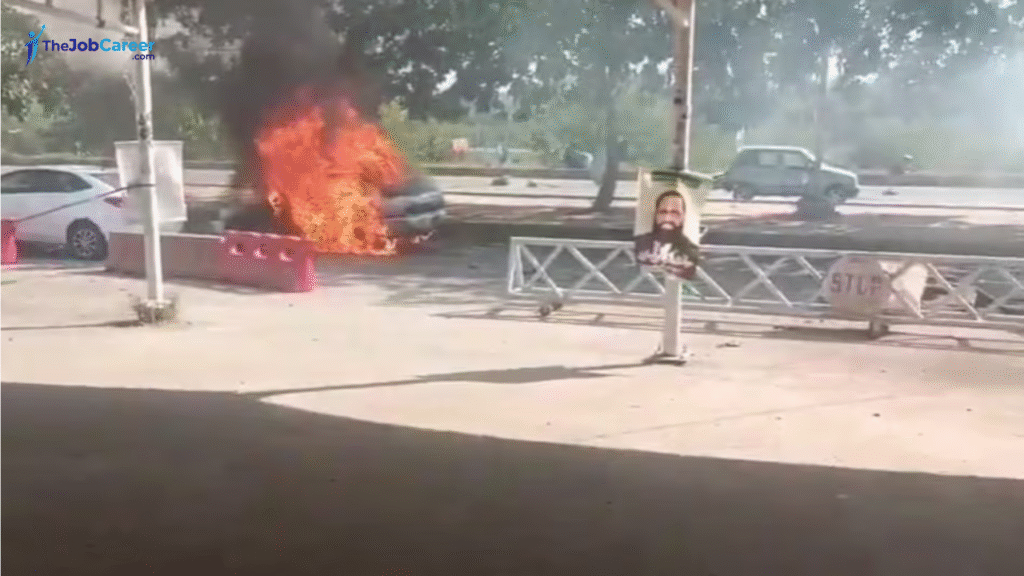
According to officials, the blast took place near the main entrance of a district court complex in Islamabad, where hundreds of lawyers, petitioners, and police officers were present for routine hearings. Eyewitnesses described the moment as one of “complete chaos”, with people running for cover as vehicles caught fire.
A local lawyer, Rustam Malik, told news agency AFP that he was parking his car when he heard the explosion.
“It was complete chaos. Lawyers and people were running inside the complex. I saw two dead bodies lying at the gate and several cars were on fire,” said Malik.
Initial reports suggested that several vehicles parked outside the court were damaged or completely destroyed in the explosion. The injured were immediately shifted to Pakistan Institute of Medical Sciences (PIMS) and other nearby hospitals, where emergency teams were deployed.
Cause of the Explosion Under Investigation
The exact cause of the blast remains under investigation. Local media reports indicated that a gas cylinder inside a vehicle might have exploded, but police have not confirmed any theory.
“We cannot comment on the cause at this stage. The investigation team is examining forensic evidence,” said a senior Islamabad police officer.
Bomb disposal squads and forensic experts have cordoned off the area and are analyzing debris to determine whether it was an accidental cylinder explosion or a deliberate act of terror.
Witnesses reported hearing a “massive bang” followed by flames and thick smoke. Video clips circulating on social media showed people rushing the injured to safety as rescue personnel arrived on the scene.
Authorities have stepped up security across Islamabad, particularly around judicial complexes, government buildings, and foreign embassies, fearing the possibility of coordinated attacks.
Blast Comes After Foiled Attack in Khyber Pakhtunkhwa
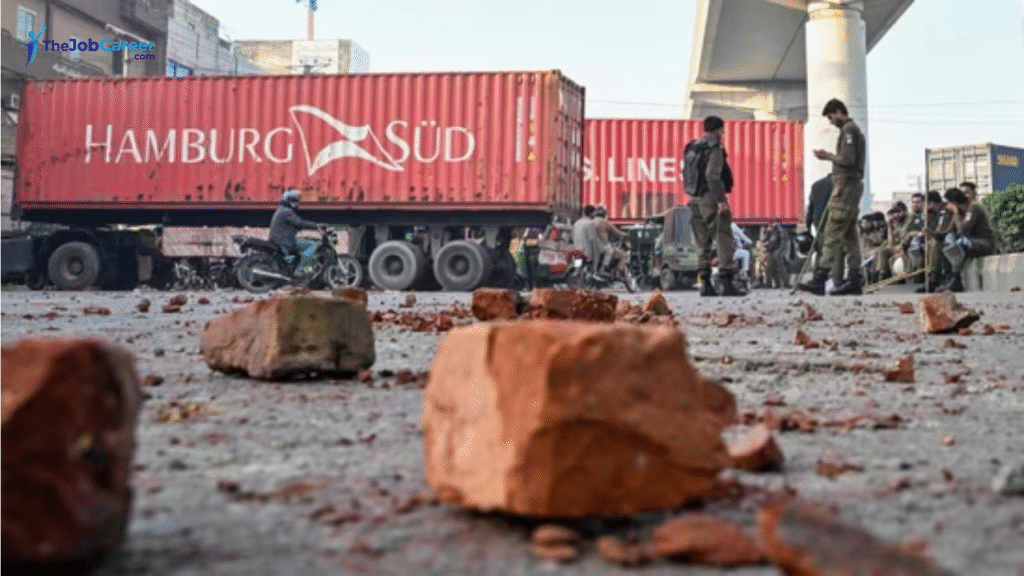
The Islamabad court blast follows closely on the heels of a terror plot foiled in Wana, a city located in Pakistan’s Khyber Pakhtunkhwa province, near the Afghan border — a region long known for its militant activity.
According to Associated Press (AP), a group of six Pakistani Taliban (TTP) militants, including a suicide bomber, attempted to storm an army-run cadet college in Wana late Monday night. The assailants planned to take students and instructors hostage in a high-profile attack.
However, Pakistani security forces responded swiftly. In a statement, local police chief Alamgir Mahsud confirmed that troops killed two militants at the entrance, while three others who entered the compound were cornered in one of the blocks.
“All cadets, instructors, and staff remained safe,” Mahsud said.
The exchange of fire lasted several hours. Although no cadets were harmed, the suicide car bombing outside the college left 16 civilians and several troops injured, and nearby houses were damaged due to the blast impact.
Officials confirmed that all attackers were eventually neutralized and a cache of weapons and explosives was recovered from their possession.
Wana: A Longtime Terror Hotspot
The town of Wana, located in South Waziristan, has historically served as a stronghold for the Pakistani Taliban, al-Qaida, and affiliated extremist networks. Despite multiple military operations, remnants of these groups continue to operate from the Afghan-Pakistan border region, taking advantage of rugged terrain and porous boundaries.
Security analysts said the latest incident reflects a resurgence of militant activity following the collapse of the fragile truce between the Tehrik-i-Taliban Pakistan (TTP) and the Pakistani government in late 2022.
“The back-to-back incidents show that extremist groups are trying to reclaim attention and disrupt internal stability in Pakistan,” said Karachi-based security expert Aamir Rana.
Blast in Islamabad Raises Fears of Wider Coordination
The proximity in timing between the Islamabad explosion and the foiled Wana attack has raised concerns of a possible coordinated terror campaign aimed at destabilizing Pakistan’s major cities.
Islamabad, once considered relatively secure compared to restive provinces, has witnessed increased militant threats in recent years. The last major attack in the capital occurred in 2023 when a suicide bomber targeted a police checkpoint, killing two officers.
The Pakistani Interior Ministry has directed all provinces to remain on high alert, particularly in Punjab, Sindh, and Khyber Pakhtunkhwa, amid intelligence warnings of potential retaliatory strikes.
Blast in Delhi Adds to Regional Tension
The Islamabad blast comes less than 24 hours after a deadly explosion near Red Fort in New Delhi, India, killed at least 13 people and injured over 20 others.
According to Indian authorities, the blast occurred when a Hyundai i20 car exploded near a red light close to the Lal Qila Metro Station. Investigators said the vehicle, which had been parked near the historic fort for several hours, suddenly erupted into flames, damaging nearby vehicles and injuring pedestrians.
The driver, identified as Umar Un Nabi, a doctor from Pulwama, Jammu and Kashmir, was killed instantly. Delhi Police have registered a case under the Unlawful Activities (Prevention) Act (UAPA) and the Explosives Act, and are probing possible terror links.
Two individuals who had previously owned the car have been detained for questioning, and security agencies are investigating whether the explosion was accidental or deliberate.
Regional Security on Edge
The near-simultaneous incidents in Islamabad and New Delhi have heightened regional security concerns, particularly as both countries grapple with internal extremist threats.
Counter-terror experts note that militant groups in South Asia are increasingly turning to urban targets, aiming to sow panic and undermine state confidence.
In Islamabad, rescue and forensic teams worked late into the evening, clearing debris and collecting samples from the blast site. Police said an official statement on the cause of the explosion would be made once forensic reports are complete.
Pakistan’s caretaker government, facing rising militant attacks in its northwest, condemned the incident and vowed to hold those responsible accountable.
“We will not allow terrorists to create fear or destabilize the nation,” said a government spokesperson in Islamabad.
Conclusion
The deadly blast at Islamabad’s local court underscores Pakistan’s continuing struggle against extremism, even as its security forces battle renewed Taliban offensives in border regions. The timing of the explosion — following the foiled Wana attack and coinciding with a similar incident in India’s capital — points to a volatile phase in regional security dynamics.
While investigations are ongoing in both Islamabad and New Delhi, officials in both countries remain on high alert amid fears of copycat or coordinated terror strikes across South Asia.